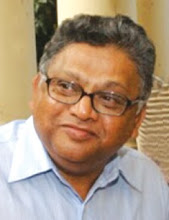
Plight of Dalit Christians
By P.N.Benjamin
As per the 2001 census, there are 24.20 million Christians in India of which the Christians of South India constitute 12.5 million, more than half the total Christian population of India, and those of the North-east, 5.4 million. The total population of Tamil Nadu Christians is 3.8 million, Karnataka one million, Kerala 6 million, Andhra Pradesh 1.2 million and Goa 0.4 million. Dalits constitute 65% of the total South Indian Christian population. Some Christian groups even claim that dalits constitute 70% of the Christians of Tamil Nadu.
To corrupt George Orwell's famous aphorism: "all Indian Christians are equal, but some are more equal than others". By embracing Christianity, the Dalits have not found themselves emancipated from economic and social inequalities. Conversions have neither offered the Dalits a way of escape from the bondage of caste nor have they fostered the social transformation of the Dalit Christians. They still live under the same conditions of discrimination, exploitation and oppression.
Bishop Dr D.K. Sahu, a former general secretary of the National Christian Council of India (NCCI) once said: "The Indian church has to make a confession first. If you are alienated in society and you become a Christian, you are alienated again. We tell them, 'if you become Christian then there is no discrimination', but once they become Christian they are looked down upon by Christians of higher castes. A higher caste Christian will never marry a Dalit Christian, yet we say we are all one."
By embracing Christianity the Dalits have not found themselves emancipated from economic and social inequities. On the other hand they even find themselves to be victims of double discrimination in their new religion. Jesus himself has said that those who proselytize end up making their "victims" twice as miserable. That is what is happening in the case of Dalits, regardless of whether they seek refuge in Christianity, Islam or Buddhism. Their initial caste identity persists unless they relocate and live in areas where no one knows their antecedents. But, then they become caught up in a quandary when they would like to access the benefits of affirmative action programs such as admissions to educational institutions, government jobs etc by reclaiming their Dalit status. It becomes a CATCH-22 situation.
The Church has sinned more than others in perpetuating social injustices against Dalit Christians. Casteism is rampant in the Church. Caste discrimination takes many forms among Indian Christians. In rural areas they cannot own or rent houses, however well placed they may be. Inter-caste marriages are frowned upon and caste tags are still appended to the Christian names of high caste people. Humiliating discrimination on the basis of caste does not spare the Dalit Christians even in death. Separate places are marked out for them in the parish churches and burial grounds.
Charity begins at home. But, the home (Church) where it begins, the Dalits Christians do not belong. According to a study, all the landed properties of churches in India put together, the church is the second biggest landlord in the country, next only to the Government. In addition, the Church - Catholic, Protestant, Pentecostal and all other denominations- its institutions and Church-led NGOs receive millions of dollars worth foreign financial support every year. However, there is no transparency with regard to these funds as well the massive income accruing from the elite schools, colleges and hospitals and also shopping complexes built all over the major cities in the country.
“Christians are a mere 2.5 per cent of the Indian population. But the Church in India suffers from a case of plenty, says Remy Denis, All India Catholic Union President. According to him Church authorities control funds equivalent to the Indian Navy’s annual budget. But, the poor Dalit Christian does not even get the crumbs, leave alone participation in Church matters. The Indian Church has miserably failed to take care of Dalits converted to Christianity
Besides, indiscriminate conversions have ruined the spirit of Christianity into savagery. Christianity is a path paved with suffering and service. Christ said: "If any one wants to follow me, let him take up the Cross and follow me”. But, the Indian Church leaders want the Government to carry the cross of Dalit Christians. That’s why they have been demanding reservation to Dalit Christians in education, Central and State Government jobs and social welfare schemes.
Church leaders have tamed the Dalit Christians and reduced them to eternal slaves of organized Church bodies. On the one hand, the Church demands reservation for Dalit Christians from the government while on the other, it opposes and refuses to provide them reservation in the Church structure.
Thus, the Church's call for re-distribution of national resources in favor of Dalit Christians will be heeded only when its own resources are re-allocated and used with a clear partiality for Dalits in its own fold. The Church's fearless stand for justice will no longer let it remain silent about the discrimination within the Church - a matter of shame to its members and an embarrassment to its friends.
Dalit Christians have been used as cannon fodder by Church leaders and Dalit NGOs. These leaders have grown fat and powerful and enjoy better standards of living and greater prestige than the poor and ordinary Dalit Christians. Their eyes are turned westward even more than during the Pax Britannica, and they draw their inspiration not so much from the poverty, inequality and indignities faced by the Dalit Christians within the Church but from the next seminar in Geneva or other western capitals.
It is time Dalit Christians stood united and fought for their rights in the Church until they are equals in the Christian fraternity first before seeking equal treatment from the government. It would be futile to expect others to give them support with a real change of heart. This goal can be achieved by following intelligently Ambedkar's exhortation: "educate, organize and agitate.
Dalit Christians' plight calls for a deeper analysis of the problem so that Christian leaders do not throw stones at the caste system prevailing in Hinduism but look to something more meaningful and constructive. Without going into details of how enlightened Hindus have dealt with the unconscionable practice of untouchability, the Church in India must audit its own record with regard to the dalit Christians.
P.N.BENJAMIN
Coordinator,
Bangalore Initiative for Religious Dialogue (BIRD)
Wednesday, July 21, 2010

Activities of BIRD
The BIRD was formed in 2001 by a group of Hindus, Muslims and Christians in Bangalore to promote inter-faith amity, understanding and pluralism in line with our native wisdom of inclusivism for preserving India's religious diversity. Towards that end, BIRD conducts seminars, consultations, panel discussions, organizes inter-religious dialogues etc.
Stanley Samartha Memorial Lecture series
The signature event of BIRD’s activities is the annual Rev. Dr. Stanley Samartha Memorial Lecture series organized in the month of October since 2001 in honour of that “Christian prophet of religious pluralism” who took pride in always affirming that he was "a Hindu by culture, Christian by faith, Indian by citizenship and ecumenical by choice".
BIRD has so far organised eight lectures in this series since 2001.
· "The Need for Inter-religious Dialogue",
· "Communal Harmony – A Societal Perspective",
· "Religion in 21st Century – A perspective of Hope",
· "Courage for Dialogue",
· "Towards an Ethical Code of Conduct for Conversion",
· the “Right to Convert & the Indian Constitution “ and
· “The Power of Religion vs. the Religion of Power”.
They were delivered by Mr. Francois Gautier (2001), Dr. C.T.Kurien (2003), Dr. M.V.Nadkarni (2004), Rt. Rev. Dr. Philipose Mar Chrysostom, Metropolitan of the Mar Thoma Church (2005), Dr. Hans Ucko of World Council of Churches(2006), Justice K.T.Thomas (2007) Mr. M.J.Akbar (2008) and Mr. Arun Shourie (2009) respectively
Well known French journalist and author Francois Gautier delivered the first Samartha Memorial Lecture at Bishop Cotton Boys’ School in Bangalore on 6 Oct. 2007
The 5th Dr. Stanley Samartha Memorial Lecture 2006 on 23rd September 2006 on the Theme "Towards an Ethical Code of Conduct for Religious Conversions was held at St. Mark's Cathedral. Dr. Hans Ucko, Programme Executive, Inter Religious Relation and Dialogue, World Council of Churches, Geneva, Switzerland, delivered the lecture
This programme was organized by Bangalore Initiative for the Religious Dialogue, in association with Young Men's Christian Association and St. Mark's Cathedral
Justice K.T.Thomas, retired judge of Supreme Court of India, delivered the 6th Stanley Samartha Memorial Lecture on 8th October 2007 at St. Mark’s Cathedral. He spoke on “the Right to Convert and the Indian Constitution”
The seventh Samartha Memorial Lecture was delivered by
M.J.Akbar, well known editor and author on 9th October 2008 at the United Theological College.
News reports
SAMARTHA MEMORIAL LECTURE-2008'Don't challenge the logic of any faith' 10 Oct 2008, BANGALORE: Journalist and writer M J Akbar said India's harmony was being threatened by "phenomena that have emerged only recently" , having nothing to do with India's rich ancient tradition of tolerance and secularism.
Delivering a lecture on the connection between religion and power at the United Theological College here on Thursday, Akbar said India was bedevilled by arbitrary violence in the form of bomb attacks and attacks on communities and their property. "Innocents are dying. No religion in the world subscribes to such mindless and meaningless mayhem. We cannot survive if we go on permitting such violence." Akbar argued that people had to learn to live with each other's faith - the key to India's peace, secularism and harmony. "We don't have an alternative - we need to allow people to keep their faith without challenging the logic of any faith. We have to keep our faiths and yet get along. India's secularism can only arise from among its many faiths." There was no justification for conservatism of any sort in any faith, Akbar pointed out. "Everybody is equal within and outside faith and that includes men and women. There is no rationale to treat any person as an unequal. If the dialogue between faiths doesn't happen as equals, we will be in peril," he warned. One of the great attributes of ancient Hinduism has been tolerance for all faiths and beliefs. "That is what we need to continue with. We should have a composite , broad and catholic vision that is respect for all faiths. Nothing comes out of defaming faith. The mistakes of a few cannot be held against the faith itself." Akbar traced the history of major religions of the world, moving from Asia to the West and back, proposing that the one focus of all religions in the 21st century had to be peace. "The 21st century gives us everything but peace. Peace comes with better understanding , understanding comes with dialogue and dialogue happens between equals. This is the lesson for all of us." http://timesofindia .indiatimes. com/
Secularism allows parallel faiths: M J Akbar
Express New Service 10 Oct 2008 BANGALORE: The 21st century gave us many a good thing, but forgot to give us peace and nothing else has disturbed peace in our times as religion has, said senior journalist and author, M J Akbar, here on Thursday. He was speaking at the seventh Stanley Samartha Memorial Lecture at the United Theological College on ‘The Power of Religion Vs The Religion of Power’. "Religion is not uni-dimensional; it is like a prism that shifts and changes colour. Problems begin when institutionalisation of faith starts. When power adopts religion, the religion flies out of the window," he said. On incidents of communal clashes, including the recent attacks on churches, Akbar said: "This is a new phenomenon to disturb the harmony in our society. Indian secularism permits people to believe what they want to believe in." "There is a substantial potential for friction in our country but secularism implies existence of parallel faiths without challenging each other’s logic. Faith by itself is irrational and hence, in India, there is no space for the Bajrang Dal attacking churches or for anyone who is part of a church saying things that are unacceptable to the Hindus. Being angry about the Babri Masjid demolition doesn’t give one the right to criticise Rama or Krishna." Peace cannot be established without understanding, understanding cannot come without dialogue; and dialogue cannot happen except among equals, he said. http://www.expressb
Don't blame religion for acts of individuals: Akbar
DH News Service, Bangalore: Democracy is a great system, but the temptation to get votes makes political parties seek strife, said veteran journalist M J Akbar.He was delivering the Stanley Samartha memorial lecture in the city on Thursday on ‘The power of religion Vs the religion of power.’He said, "A State cannot remain secular if they do not allow people to practice their faith. We permit everyone to follow their faith or belief without challenging its logic or sneering at it. But some people seek strife because it is politically advantageous. "Questioning the Western nations’ tendency to oversimplifying differences to Islam Vs West, he said: "How can you discuss Islam with geography? Unless there is a sub-text that implies everything West is progressive and forward thinking, while everything Islamic is barbaric and medieval." He also questioned the habit of blaming the religion for the acts of individuals. "Do I blame Christianity for Hitler," he asked.The real problem for Muslims in India, he said, was not from other religions but from poverty, ignorance and gender bias. The bias does not exist in Islam but in Muslim society, he claimed. When the Shah Bano case was decided, he said that the State could have taken up the issue of reforms, but did not do so and a good opportunity was hence passed up. "The hysteria of Muslim response alienated the Hindus, who did not understand why a community did not want reforms," he opined.He concluded by saying that these issues could not be addressed without following what we preached to others. http://www.deccanhe rald.com/ Content/Oct10200 8/city2008101094 m/ Content/Oct10200 8/city2008101094 356.asp
On an average four hundred people, students, young and old professionals, thinkers and writers and members of various organizations and others attend this prestigious lecture which is followed by an interactive session.
OTHER ACTIVITIES
An Evening with Gandhi’s favourite hymns and prayers -30 January 2008 – 50th anniversary of Gandhi’s martyrdom organized by BIRD jointly with United Theological College and ACTS Ministries
Remembering Gandhi and his idealshttp://www.deccanherald.com/Content/Jan282008/metromon2008012748945.aspDeccan Herald - Bangalore, IndiaBy Nina C. George The Bangalore Initiative for Religious Dialogue (BIRD), the ACTS Ministries, the Basel Mission Christian Association and the Rainbow Forum have joined hands to put together an evening of Gandhijis favourite hymns and prayers. India plunged into sorrow, the day Mahatma Gandhi was shot. Today 60 years later as the death anniversary of the Mahatma draws near, we remember the man who bought us freedom and also recall that Gandhiji was a staunch secularist whose unshakable faith in universal brotherhood is reflected in his fascination for the hymns from the Bible, Gita and Koran. An evening of hymnsThe Bangalore Initiative for Religious Dialogue (BIRD), the ACTS Ministries, the Basel Mission Christian Association and the Rainbow Forum have joined hands to put together an evening of Gandhiji’s favourite hymns and prayers, on January 30 at 4.30 pm at the Charles Ranson Hall – United Theological College, to pay homage to the memory of Mahatma Gandhi on the 60th anniversary of his martyrdom. It is an inter-faith programme where choirs from Cluney Convent School and the United Theological College will sing Gandhiji’s favourite hymns and songs. There will be readings from religious scriptures as well as from Gandhiji’s own writings and also tributes paid to him sixty years ago and later by Jawaharlal Nehru, Sarojini, Einstein, C F Andrews, Stanley Jones, Nelson Mandela, Martin Luther King Jr. Lead Kindly Light, Abide with me, When When I survey the Wondrous Cross and Rock of ages are among his favourite hymns. Some popular bhajans which were sung during the prayer meetings of Gandhiji will also be sung on January 30. Some of the Christian songs moved Gandhiji deeply. His choice of hymns shed much light upon his own religious personality. The hymn, `When I survey the wondrous Cross,' touched his inner most feelings. To Gandhiji, God was truth and light. As in Gandhiji's own words: "I am in the world feeling my way to light amid encircling gloom. I often err and miscalculate. My trust is solely in God". And the song `Lead kindly Light,' composed by Cardinal Newman always gave him strength. The ancient hymns and prayers sung or read during such meetings included famous passages from the Gita, the Bible, and the Koran that proclaimed the power of truth. Then there were the songs of Tulsi Das, Sur Das, Kabir, Nanak, and Narasimha Mehta — they all glorified renunciation, self-purification, and the brotherhood of all mankind. Some of these songs will be sung during the concert. Gandhiji was free from any kind of religious dogmas and biases. His universalism in this regard was unique and unequalled. "I am a Christian, a Hindu, a Muslim and a Jew," he said. It was Gandhiji's conviction that the one whose mind is untroubled in the midst of sorrows and is free from eager desires amid pleasures, from whom passion, fear and rage has passed away, he is a sage of settled intelligence.
Building a Culture of Peace Gandhi's Vision: Inter-Faith Harmony in Southern India
By Douglas Norell
Excerpts from the article in the 2007/08 winter issue of PEACE IN ACTION
…. UTC’s heritage and its strong ecumenical base enhance inter-faith contacts, which it often has undertaken in partnership with a sister organization, the Bangalore Initiative for Religious Dialogue (BIRD). For example, UTC hosted a worship service featuring Gandhi’s favorite Hindu and Christian hymns with BIRD and other groups to commemorate the 60th anniversary of his martyrdom. The event showcased Gandhi’s universalism, tersely manifested in his famous statement. “I am a Christian, a Hindu, a Muslim, and a Jew.”
Bangalore Initiative for Religious Dialogue (BIRD)
For its part, BIRD explicitly stated in a January 1, 2007 open letter to the Prime Minister of India, the U.N. Secretary General, the European Union, and the U.S. State Department that it supports peaceful coexistence among Indian religions and opposes aggressive proselytism. The letter was signed by some 650 Christian leaders including BIRD’s founder and coordinator, P.N. Benjamin, and Rev. Dr. Jayakiran Sebastian, Professor of Theology and Ethics at UTC.
Benjamin has spotlighted poignantly the futility of exclusivist religious truth claims by pointing out that not only Hindus bear responsibility for mistreating the Dalits or “untouchables.” He echoes Dr. Razu’s perspective by arguing that even Christians “… have miserably failed in taking care of 16 million Dalits converted to Christianity.”
BIRD members profess the Christian faith, but they value the Hindu tradition of Dharmic tolerance. BIRD not only writes about religious tolerance and pluralism; it also provides forums for mutual dialogue such as lectures, workshops, and conferences. These discussions lead to the formulation of action plans for peacebuilding in India, the U.S., and around the world. BIRD further organizes cultural tours, offers articles and commentary in the media, and conducts rallies and campaigns.
Of special note, BIRD joins with Rashtriya Swayam Sevak Sangh (RSS), a sister Hindu organization, in sending intervention teams to quell outbreaks of inter-religious violence and to set a framework for post-conflict resolution. In 2002, for example, it intervened to help squelch Hindu-Christian tensions arising from an attack on Mysore’s Holy Family Church. An article in the March 1, 2002 National Catholic Reporter said that a priest and a dozen Catholics were injured in the attack, and the new church was ransacked.
The joint fact-finding team condemned violence on the part of Hindus, while encouraging the Christians to evangelize with awareness that they “… should not cross the limits of decency and should not hurt the sensitivities of adherents of other faiths.” The report thereby pinpointed the Hindu misperception of aggressive proselytizing as a root cause of the violence while reassuring Christians that the joint team shared their anxieties. The joint team also recommended formation of a permanent Hindu-Christian community forum for dialogue “… to prevent recurrence of such incidents in the future….”
In conclusion, I found on my tour that the minority Christian community of South India has contributed substantially to building a culture of peace. This is reflected in the history, curriculum and programs of three ecumenical seminaries and a Christian advocacy group. These institutions have manifested Christian pluralism by embracing the religious stranger and learning from other faith traditions. In joining hands with Hindus and Muslims through education and reconciliation, these Christian institutes have helped thousands of people in southern India to realize Gandhi’s – and Samartha’s – vision of inter-religious harmony and social justice.
Hinduism – A Gandhian Perspective
Prof. M.V.Nadkarni’s book, Hinduism: a Gandhian Perspective, was released by the Governor of Karnataka, at the Raj Bhavan in Bangalore on 25 October 2006. BIRD coordinator P.N.Benjamin (seen 3rd from left) was one of the main speakers, reviewing the book. Others in picture from L-R are: Prof. Nadkarni, ANE Books chief executive,P.N. Benjamin, former chief Justice Rama Jois, the Governor Chaturvedi & Prof. Rao.
L-R: P.N.Benjamin, Justice Rama Jois, Governor Chaturvedi, Prof. Rao & Prof. Nadkarni
A Panel Discussion on Hinduism – A Gandhian Perspective
The Panelists were Dr. C.T. Kurien, (Eminent Economist and Professor Emeritus MIDS), Dr. N. Jayaram (Director, Inst. For Social & Economic Change), Dr. Narendra Pani (Sr. Editor, Economic Times), Dr. Ali Khawaja (Banjara Academy).
An Introduction to the book was provided by Prof. M.V. Nadkarni (Former Vice Chancellor of Gulbarga University
The programnme was moderated by Mr. Siddartha (Director FIREFLIES) Ashram
Programme was organized by BIRD, in association with YMCA Bangalore and St. Mark's Cathedral on 30th January 2007 at St. Marks Cathedral Auditorium at 5.00 p.m. Rev. Vincent Rajkumar welcomed the gathering. BIRD coordinator P.N.Benjamin proposed a Vote of Thanks.
Workshop and Seminar
BIRD organised a three-day Workshop cum Seminar on "Basics of interfaith education and peace building" at YMCA on 26 – 28 APRIL 2007.
Its objectives were:
1) To understand the importance and potential of peace and religious diversities
2) To Introduce the group to methods of communication and peace education,
3) To build a constituency of supporters of interfaith dialogues
4) To develop skills to project achievements to gain support & hold small events to raise awareness and
5) To outline an annual interfaith dialogue and peace education plan in schools and colleges.
There were 60 participants. They included heads of NGOs, High School teachers and college lecturers.
Faculty consisted of Fr. Dr. George Koovakal (Messengers of Peace & Harmony of the Catholic Diocese of Delhi), Rev. Dr. Kiran Sebastian of UTC Bangalore, Koshy Mathew, Communications Consultant, P.N.Benjamin, Coordinator, BIRD & J.D. Suhas, Sr, Secretary, Bangalore YMCA.
---------------------------------------------------------------------------------------------------------------
BIRD DECLARATION
Bangalore Initiative for Religious Dialogue (BIRD), in a letter addressed to the Prime Minister of India on January 1, 2007, signed by more than five hundred Christians of the city stated:[8]
While we decry the attempts of religious leaders and fundamentalists of all varieties to convert and re–convert, we pledge to work diligently for inter–faith amity in the best traditions of Indian culture. We hereby call on all Indians to join in our efforts to preserve a pluralist India founded on secularism and religious inclusion and governed by a Constitution that guarantees all its citizens all freedoms vital to the functioning of a modern democracy
Dialogue Liberates People from Religious Intolerance
Prof. N.S. Ramaswamy who was recently awarded the "Padmabhushan", while addressing the gathering, the inter-religious dialogue was the best means to liberate the people from religious intolerance and fanaticism. The meeting was organized on 27th April 2006 by BIRD and dialogue wing of the City YMCA Bangalore called Movement for Inter Religious Understanding and Harmony (MIRUH).
The programme started with the recitation of "Shlokas" by Prof. Ramaswamy . BIRD coordinator P.N.Benjamin, the welcomed the gathering. Fr George Koovakal, President Messengers of Peace and Harmony and P.N.Benjamin of BIRD felicitated Prof. Ramaswamy for receiving the much coveted "Padmabhushan" Award.
Peace for Progress - Independence Day Celebration
BIRD Celebrated Independence Day on Saturday, the 12th August 2006, on the Theme: "TOWARDS PEACE FOR PROGRESS" Students from different schools participated in the events and performed cultural programmes like group songs, dance, play on the theme. This programme was jointly organized by BIRD and the YMCA Mr. King Das. M, Chairman of the Task Group presided over the function
International Peace Day Celebrations
The Bangalore Initiative for Religious Dialogue (BIRD) and YMCA’s Task Group on Secularism organized the International Peace Day Celebration in association with IARF (International Association for Religious Freedom and DBM (Dharma Bharati Mission) on 23rd September 2006 at YMCA.
Lecture Series - 2005-2006
Dharmaram Vidya Niketan, Bangalore, Center for the Study of World Religious (CSWR) along with YMCA Bangalore BIRD (Bangalore Initiative for Religious Dialogue), FIREFLIES ASHRAM, (Bangalore Forum for Science and Religion) (BFSR) organized a six months' Certificate Course which started on 13th Sunday, August 2006 at 10.30 a.m. at CSWR Multimedia Hall. During the six months course relevant contemporary Inter Disciplinary and Inter Religious themes were discussed by prominent personalities in respective fields. This year's Lecture Series theme was: 'RATIONALITY, RELIGION AND PROSPERITY".
Consultation on Peace Education
As we are well aware, that the Peace & Communal Harmony has become one of the most urgent needs of our country, which was, till recently known for its positive attitude & openness towards the followers of all faith. Many factors have contributed to the present day development of hatred, violence & even riots in the name of religions. This has certainly poisoned the minds & hearts of our young people.
With this background Bangalore Initiative for Religious Dialogue(BIRD) YMCA Bangalore Benedictine Inter Religious Dialogue (BID) and Messengers of peace and harmony organized, two days consultation on peace education for teachers. This programme was organized at Benedictine Inter Religious Dialogue centre at Asirvanam, Kumbalgodu. Nearly 65 teachers, educators attended the two days residential workshop on December 2006. Rev. Fr. GEORGE NELLIYANY delivered the welcome address. The Inaugural address was given by Rev. Fr. Stephen OSB, Fr. George Koovakal Director MPH Delhi gave orientation to the whole Programme. The following were the resource persons who spoke on the different perspective on peace education: M/s: A.S.K Vasishtha - Hindu Perspective of peace Education, A.D. Shah - Jain Perspective of peace Education, Rev Fr. Pradeep Sequrian S.J.-Christian Perspective of peace Education, M.A. Siraj B.B.C (Journalist)-Islam Perspective of peace Education, H.S. Bhatia -Sikh Perspective of peace Education, Master Bhodi Bhushan - Buddhist Perspective of peace Education. His holiness Jagadguru Sri Sri Sri Shivapuri Mahaswamy delivered his peace message to all the participants. Rev. Fr. Jerome OSB, BID Secretary, proposed the vote of thanks.
Dialogue Partner's Meet
More than 25 participants representing the various Inter Religious dialogue centers, groups and associations and a few individuals actively involved in promoting peace and communal harmony in Bangalore met together at City YMCA on 28th March 2007. The programme was jointly organized by the Bangalore Initiative for Religious Dialogue (BIRD), the Task Group on Secularism, YMCA and the Messengers of Peace and Harmony, Delhi.
The meeting started with an inter-religious prayer. Fr. George Koovakal introduced the theme and also explained the dynamics of the meet.
Following organizations Participated in the meet: M.P.H. (Messenger of Peace and Harmony), MIRUH (Movement for Inter Religious Understanding and Harmony), PUCL (Peoples Union for Civil Liberties), Ashirvanam Inter Religious movement, Sisters Inter Religious Groups- Bridjitine, C.S.I. Inter Religious groups, SATSANGH, GURUDWARA Inter religious wing, CSWR (Centre for study of World Religions), MALA (Mapala Art
Lecture on inclusive growth and Budget 2007 was organized where in the eminent economist C.T. Kurien spoke extensively on "A high growth rate without inclusive measures generates not only millionaires, but also beggars", he said while delivering a talk on the above. Achieving inclusive growth was not all that easy as the generation of huge incomes at the top-level would always have a tendency towards exclusion of people at the lower level from the development process, he cautioned. He cautioned that the country might face an economic crisis in the course of time if no steps were taken to check the high inflation, as offshoot of high growth rate. At present, there was an imbalance in economic growth
The Bangalore Peace Forum Initiated
Bangalore has been a peace loving city, a city that has been growing in recent times beyond all proportions, where people of different languages, cultures, religious, economic strata, political affiliations etc., daily rub shoulders, yet live in peace. Hence it is important for Bangalore to remain a peace-loving city. If the cancer of violence – whether for political, linguistic, religious or economic or a mixture of these spreads and is not nipped in to bud, Bangalore will no more be a safe city, and all its great socio-economic potential will be washed down the drain.
In this context BIRD has formed a new group, Bangalore Peace Forum, to promote inter religious / inter linguistic peace and harmony in the Metropolitan City.
The Forum would include all like-minded groups that are involved in working for religious and communal harmony.
Stanley Samartha Memorial Lecture series
The signature event of BIRD’s activities is the annual Rev. Dr. Stanley Samartha Memorial Lecture series organized in the month of October since 2001 in honour of that “Christian prophet of religious pluralism” who took pride in always affirming that he was "a Hindu by culture, Christian by faith, Indian by citizenship and ecumenical by choice".
BIRD has so far organised eight lectures in this series since 2001.
· "The Need for Inter-religious Dialogue",
· "Communal Harmony – A Societal Perspective",
· "Religion in 21st Century – A perspective of Hope",
· "Courage for Dialogue",
· "Towards an Ethical Code of Conduct for Conversion",
· the “Right to Convert & the Indian Constitution “ and
· “The Power of Religion vs. the Religion of Power”.
They were delivered by Mr. Francois Gautier (2001), Dr. C.T.Kurien (2003), Dr. M.V.Nadkarni (2004), Rt. Rev. Dr. Philipose Mar Chrysostom, Metropolitan of the Mar Thoma Church (2005), Dr. Hans Ucko of World Council of Churches(2006), Justice K.T.Thomas (2007) Mr. M.J.Akbar (2008) and Mr. Arun Shourie (2009) respectively
Well known French journalist and author Francois Gautier delivered the first Samartha Memorial Lecture at Bishop Cotton Boys’ School in Bangalore on 6 Oct. 2007
The 5th Dr. Stanley Samartha Memorial Lecture 2006 on 23rd September 2006 on the Theme "Towards an Ethical Code of Conduct for Religious Conversions was held at St. Mark's Cathedral. Dr. Hans Ucko, Programme Executive, Inter Religious Relation and Dialogue, World Council of Churches, Geneva, Switzerland, delivered the lecture
This programme was organized by Bangalore Initiative for the Religious Dialogue, in association with Young Men's Christian Association and St. Mark's Cathedral
Justice K.T.Thomas, retired judge of Supreme Court of India, delivered the 6th Stanley Samartha Memorial Lecture on 8th October 2007 at St. Mark’s Cathedral. He spoke on “the Right to Convert and the Indian Constitution”
The seventh Samartha Memorial Lecture was delivered by
M.J.Akbar, well known editor and author on 9th October 2008 at the United Theological College.
News reports
SAMARTHA MEMORIAL LECTURE-2008'Don't challenge the logic of any faith' 10 Oct 2008, BANGALORE: Journalist and writer M J Akbar said India's harmony was being threatened by "phenomena that have emerged only recently" , having nothing to do with India's rich ancient tradition of tolerance and secularism.
Delivering a lecture on the connection between religion and power at the United Theological College here on Thursday, Akbar said India was bedevilled by arbitrary violence in the form of bomb attacks and attacks on communities and their property. "Innocents are dying. No religion in the world subscribes to such mindless and meaningless mayhem. We cannot survive if we go on permitting such violence." Akbar argued that people had to learn to live with each other's faith - the key to India's peace, secularism and harmony. "We don't have an alternative - we need to allow people to keep their faith without challenging the logic of any faith. We have to keep our faiths and yet get along. India's secularism can only arise from among its many faiths." There was no justification for conservatism of any sort in any faith, Akbar pointed out. "Everybody is equal within and outside faith and that includes men and women. There is no rationale to treat any person as an unequal. If the dialogue between faiths doesn't happen as equals, we will be in peril," he warned. One of the great attributes of ancient Hinduism has been tolerance for all faiths and beliefs. "That is what we need to continue with. We should have a composite , broad and catholic vision that is respect for all faiths. Nothing comes out of defaming faith. The mistakes of a few cannot be held against the faith itself." Akbar traced the history of major religions of the world, moving from Asia to the West and back, proposing that the one focus of all religions in the 21st century had to be peace. "The 21st century gives us everything but peace. Peace comes with better understanding , understanding comes with dialogue and dialogue happens between equals. This is the lesson for all of us." http://timesofindia .indiatimes. com/
Secularism allows parallel faiths: M J Akbar
Express New Service 10 Oct 2008 BANGALORE: The 21st century gave us many a good thing, but forgot to give us peace and nothing else has disturbed peace in our times as religion has, said senior journalist and author, M J Akbar, here on Thursday. He was speaking at the seventh Stanley Samartha Memorial Lecture at the United Theological College on ‘The Power of Religion Vs The Religion of Power’. "Religion is not uni-dimensional; it is like a prism that shifts and changes colour. Problems begin when institutionalisation of faith starts. When power adopts religion, the religion flies out of the window," he said. On incidents of communal clashes, including the recent attacks on churches, Akbar said: "This is a new phenomenon to disturb the harmony in our society. Indian secularism permits people to believe what they want to believe in." "There is a substantial potential for friction in our country but secularism implies existence of parallel faiths without challenging each other’s logic. Faith by itself is irrational and hence, in India, there is no space for the Bajrang Dal attacking churches or for anyone who is part of a church saying things that are unacceptable to the Hindus. Being angry about the Babri Masjid demolition doesn’t give one the right to criticise Rama or Krishna." Peace cannot be established without understanding, understanding cannot come without dialogue; and dialogue cannot happen except among equals, he said. http://www.expressb
Don't blame religion for acts of individuals: Akbar
DH News Service, Bangalore: Democracy is a great system, but the temptation to get votes makes political parties seek strife, said veteran journalist M J Akbar.He was delivering the Stanley Samartha memorial lecture in the city on Thursday on ‘The power of religion Vs the religion of power.’He said, "A State cannot remain secular if they do not allow people to practice their faith. We permit everyone to follow their faith or belief without challenging its logic or sneering at it. But some people seek strife because it is politically advantageous. "Questioning the Western nations’ tendency to oversimplifying differences to Islam Vs West, he said: "How can you discuss Islam with geography? Unless there is a sub-text that implies everything West is progressive and forward thinking, while everything Islamic is barbaric and medieval." He also questioned the habit of blaming the religion for the acts of individuals. "Do I blame Christianity for Hitler," he asked.The real problem for Muslims in India, he said, was not from other religions but from poverty, ignorance and gender bias. The bias does not exist in Islam but in Muslim society, he claimed. When the Shah Bano case was decided, he said that the State could have taken up the issue of reforms, but did not do so and a good opportunity was hence passed up. "The hysteria of Muslim response alienated the Hindus, who did not understand why a community did not want reforms," he opined.He concluded by saying that these issues could not be addressed without following what we preached to others. http://www.deccanhe rald.com/ Content/Oct10200 8/city2008101094 m/ Content/Oct10200 8/city2008101094 356.asp
On an average four hundred people, students, young and old professionals, thinkers and writers and members of various organizations and others attend this prestigious lecture which is followed by an interactive session.
OTHER ACTIVITIES
An Evening with Gandhi’s favourite hymns and prayers -30 January 2008 – 50th anniversary of Gandhi’s martyrdom organized by BIRD jointly with United Theological College and ACTS Ministries
Remembering Gandhi and his idealshttp://www.deccanherald.com/Content/Jan282008/metromon2008012748945.aspDeccan Herald - Bangalore, IndiaBy Nina C. George The Bangalore Initiative for Religious Dialogue (BIRD), the ACTS Ministries, the Basel Mission Christian Association and the Rainbow Forum have joined hands to put together an evening of Gandhijis favourite hymns and prayers. India plunged into sorrow, the day Mahatma Gandhi was shot. Today 60 years later as the death anniversary of the Mahatma draws near, we remember the man who bought us freedom and also recall that Gandhiji was a staunch secularist whose unshakable faith in universal brotherhood is reflected in his fascination for the hymns from the Bible, Gita and Koran. An evening of hymnsThe Bangalore Initiative for Religious Dialogue (BIRD), the ACTS Ministries, the Basel Mission Christian Association and the Rainbow Forum have joined hands to put together an evening of Gandhiji’s favourite hymns and prayers, on January 30 at 4.30 pm at the Charles Ranson Hall – United Theological College, to pay homage to the memory of Mahatma Gandhi on the 60th anniversary of his martyrdom. It is an inter-faith programme where choirs from Cluney Convent School and the United Theological College will sing Gandhiji’s favourite hymns and songs. There will be readings from religious scriptures as well as from Gandhiji’s own writings and also tributes paid to him sixty years ago and later by Jawaharlal Nehru, Sarojini, Einstein, C F Andrews, Stanley Jones, Nelson Mandela, Martin Luther King Jr. Lead Kindly Light, Abide with me, When When I survey the Wondrous Cross and Rock of ages are among his favourite hymns. Some popular bhajans which were sung during the prayer meetings of Gandhiji will also be sung on January 30. Some of the Christian songs moved Gandhiji deeply. His choice of hymns shed much light upon his own religious personality. The hymn, `When I survey the wondrous Cross,' touched his inner most feelings. To Gandhiji, God was truth and light. As in Gandhiji's own words: "I am in the world feeling my way to light amid encircling gloom. I often err and miscalculate. My trust is solely in God". And the song `Lead kindly Light,' composed by Cardinal Newman always gave him strength. The ancient hymns and prayers sung or read during such meetings included famous passages from the Gita, the Bible, and the Koran that proclaimed the power of truth. Then there were the songs of Tulsi Das, Sur Das, Kabir, Nanak, and Narasimha Mehta — they all glorified renunciation, self-purification, and the brotherhood of all mankind. Some of these songs will be sung during the concert. Gandhiji was free from any kind of religious dogmas and biases. His universalism in this regard was unique and unequalled. "I am a Christian, a Hindu, a Muslim and a Jew," he said. It was Gandhiji's conviction that the one whose mind is untroubled in the midst of sorrows and is free from eager desires amid pleasures, from whom passion, fear and rage has passed away, he is a sage of settled intelligence.
Building a Culture of Peace Gandhi's Vision: Inter-Faith Harmony in Southern India
By Douglas Norell
Excerpts from the article in the 2007/08 winter issue of PEACE IN ACTION
…. UTC’s heritage and its strong ecumenical base enhance inter-faith contacts, which it often has undertaken in partnership with a sister organization, the Bangalore Initiative for Religious Dialogue (BIRD). For example, UTC hosted a worship service featuring Gandhi’s favorite Hindu and Christian hymns with BIRD and other groups to commemorate the 60th anniversary of his martyrdom. The event showcased Gandhi’s universalism, tersely manifested in his famous statement. “I am a Christian, a Hindu, a Muslim, and a Jew.”
Bangalore Initiative for Religious Dialogue (BIRD)
For its part, BIRD explicitly stated in a January 1, 2007 open letter to the Prime Minister of India, the U.N. Secretary General, the European Union, and the U.S. State Department that it supports peaceful coexistence among Indian religions and opposes aggressive proselytism. The letter was signed by some 650 Christian leaders including BIRD’s founder and coordinator, P.N. Benjamin, and Rev. Dr. Jayakiran Sebastian, Professor of Theology and Ethics at UTC.
Benjamin has spotlighted poignantly the futility of exclusivist religious truth claims by pointing out that not only Hindus bear responsibility for mistreating the Dalits or “untouchables.” He echoes Dr. Razu’s perspective by arguing that even Christians “… have miserably failed in taking care of 16 million Dalits converted to Christianity.”
BIRD members profess the Christian faith, but they value the Hindu tradition of Dharmic tolerance. BIRD not only writes about religious tolerance and pluralism; it also provides forums for mutual dialogue such as lectures, workshops, and conferences. These discussions lead to the formulation of action plans for peacebuilding in India, the U.S., and around the world. BIRD further organizes cultural tours, offers articles and commentary in the media, and conducts rallies and campaigns.
Of special note, BIRD joins with Rashtriya Swayam Sevak Sangh (RSS), a sister Hindu organization, in sending intervention teams to quell outbreaks of inter-religious violence and to set a framework for post-conflict resolution. In 2002, for example, it intervened to help squelch Hindu-Christian tensions arising from an attack on Mysore’s Holy Family Church. An article in the March 1, 2002 National Catholic Reporter said that a priest and a dozen Catholics were injured in the attack, and the new church was ransacked.
The joint fact-finding team condemned violence on the part of Hindus, while encouraging the Christians to evangelize with awareness that they “… should not cross the limits of decency and should not hurt the sensitivities of adherents of other faiths.” The report thereby pinpointed the Hindu misperception of aggressive proselytizing as a root cause of the violence while reassuring Christians that the joint team shared their anxieties. The joint team also recommended formation of a permanent Hindu-Christian community forum for dialogue “… to prevent recurrence of such incidents in the future….”
In conclusion, I found on my tour that the minority Christian community of South India has contributed substantially to building a culture of peace. This is reflected in the history, curriculum and programs of three ecumenical seminaries and a Christian advocacy group. These institutions have manifested Christian pluralism by embracing the religious stranger and learning from other faith traditions. In joining hands with Hindus and Muslims through education and reconciliation, these Christian institutes have helped thousands of people in southern India to realize Gandhi’s – and Samartha’s – vision of inter-religious harmony and social justice.
Hinduism – A Gandhian Perspective
Prof. M.V.Nadkarni’s book, Hinduism: a Gandhian Perspective, was released by the Governor of Karnataka, at the Raj Bhavan in Bangalore on 25 October 2006. BIRD coordinator P.N.Benjamin (seen 3rd from left) was one of the main speakers, reviewing the book. Others in picture from L-R are: Prof. Nadkarni, ANE Books chief executive,P.N. Benjamin, former chief Justice Rama Jois, the Governor Chaturvedi & Prof. Rao.
L-R: P.N.Benjamin, Justice Rama Jois, Governor Chaturvedi, Prof. Rao & Prof. Nadkarni
A Panel Discussion on Hinduism – A Gandhian Perspective
The Panelists were Dr. C.T. Kurien, (Eminent Economist and Professor Emeritus MIDS), Dr. N. Jayaram (Director, Inst. For Social & Economic Change), Dr. Narendra Pani (Sr. Editor, Economic Times), Dr. Ali Khawaja (Banjara Academy).
An Introduction to the book was provided by Prof. M.V. Nadkarni (Former Vice Chancellor of Gulbarga University
The programnme was moderated by Mr. Siddartha (Director FIREFLIES) Ashram
Programme was organized by BIRD, in association with YMCA Bangalore and St. Mark's Cathedral on 30th January 2007 at St. Marks Cathedral Auditorium at 5.00 p.m. Rev. Vincent Rajkumar welcomed the gathering. BIRD coordinator P.N.Benjamin proposed a Vote of Thanks.
Workshop and Seminar
BIRD organised a three-day Workshop cum Seminar on "Basics of interfaith education and peace building" at YMCA on 26 – 28 APRIL 2007.
Its objectives were:
1) To understand the importance and potential of peace and religious diversities
2) To Introduce the group to methods of communication and peace education,
3) To build a constituency of supporters of interfaith dialogues
4) To develop skills to project achievements to gain support & hold small events to raise awareness and
5) To outline an annual interfaith dialogue and peace education plan in schools and colleges.
There were 60 participants. They included heads of NGOs, High School teachers and college lecturers.
Faculty consisted of Fr. Dr. George Koovakal (Messengers of Peace & Harmony of the Catholic Diocese of Delhi), Rev. Dr. Kiran Sebastian of UTC Bangalore, Koshy Mathew, Communications Consultant, P.N.Benjamin, Coordinator, BIRD & J.D. Suhas, Sr, Secretary, Bangalore YMCA.
---------------------------------------------------------------------------------------------------------------
BIRD DECLARATION
Bangalore Initiative for Religious Dialogue (BIRD), in a letter addressed to the Prime Minister of India on January 1, 2007, signed by more than five hundred Christians of the city stated:[8]
While we decry the attempts of religious leaders and fundamentalists of all varieties to convert and re–convert, we pledge to work diligently for inter–faith amity in the best traditions of Indian culture. We hereby call on all Indians to join in our efforts to preserve a pluralist India founded on secularism and religious inclusion and governed by a Constitution that guarantees all its citizens all freedoms vital to the functioning of a modern democracy
Dialogue Liberates People from Religious Intolerance
Prof. N.S. Ramaswamy who was recently awarded the "Padmabhushan", while addressing the gathering, the inter-religious dialogue was the best means to liberate the people from religious intolerance and fanaticism. The meeting was organized on 27th April 2006 by BIRD and dialogue wing of the City YMCA Bangalore called Movement for Inter Religious Understanding and Harmony (MIRUH).
The programme started with the recitation of "Shlokas" by Prof. Ramaswamy . BIRD coordinator P.N.Benjamin, the welcomed the gathering. Fr George Koovakal, President Messengers of Peace and Harmony and P.N.Benjamin of BIRD felicitated Prof. Ramaswamy for receiving the much coveted "Padmabhushan" Award.
Peace for Progress - Independence Day Celebration
BIRD Celebrated Independence Day on Saturday, the 12th August 2006, on the Theme: "TOWARDS PEACE FOR PROGRESS" Students from different schools participated in the events and performed cultural programmes like group songs, dance, play on the theme. This programme was jointly organized by BIRD and the YMCA Mr. King Das. M, Chairman of the Task Group presided over the function
International Peace Day Celebrations
The Bangalore Initiative for Religious Dialogue (BIRD) and YMCA’s Task Group on Secularism organized the International Peace Day Celebration in association with IARF (International Association for Religious Freedom and DBM (Dharma Bharati Mission) on 23rd September 2006 at YMCA.
Lecture Series - 2005-2006
Dharmaram Vidya Niketan, Bangalore, Center for the Study of World Religious (CSWR) along with YMCA Bangalore BIRD (Bangalore Initiative for Religious Dialogue), FIREFLIES ASHRAM, (Bangalore Forum for Science and Religion) (BFSR) organized a six months' Certificate Course which started on 13th Sunday, August 2006 at 10.30 a.m. at CSWR Multimedia Hall. During the six months course relevant contemporary Inter Disciplinary and Inter Religious themes were discussed by prominent personalities in respective fields. This year's Lecture Series theme was: 'RATIONALITY, RELIGION AND PROSPERITY".
Consultation on Peace Education
As we are well aware, that the Peace & Communal Harmony has become one of the most urgent needs of our country, which was, till recently known for its positive attitude & openness towards the followers of all faith. Many factors have contributed to the present day development of hatred, violence & even riots in the name of religions. This has certainly poisoned the minds & hearts of our young people.
With this background Bangalore Initiative for Religious Dialogue(BIRD) YMCA Bangalore Benedictine Inter Religious Dialogue (BID) and Messengers of peace and harmony organized, two days consultation on peace education for teachers. This programme was organized at Benedictine Inter Religious Dialogue centre at Asirvanam, Kumbalgodu. Nearly 65 teachers, educators attended the two days residential workshop on December 2006. Rev. Fr. GEORGE NELLIYANY delivered the welcome address. The Inaugural address was given by Rev. Fr. Stephen OSB, Fr. George Koovakal Director MPH Delhi gave orientation to the whole Programme. The following were the resource persons who spoke on the different perspective on peace education: M/s: A.S.K Vasishtha - Hindu Perspective of peace Education, A.D. Shah - Jain Perspective of peace Education, Rev Fr. Pradeep Sequrian S.J.-Christian Perspective of peace Education, M.A. Siraj B.B.C (Journalist)-Islam Perspective of peace Education, H.S. Bhatia -Sikh Perspective of peace Education, Master Bhodi Bhushan - Buddhist Perspective of peace Education. His holiness Jagadguru Sri Sri Sri Shivapuri Mahaswamy delivered his peace message to all the participants. Rev. Fr. Jerome OSB, BID Secretary, proposed the vote of thanks.
Dialogue Partner's Meet
More than 25 participants representing the various Inter Religious dialogue centers, groups and associations and a few individuals actively involved in promoting peace and communal harmony in Bangalore met together at City YMCA on 28th March 2007. The programme was jointly organized by the Bangalore Initiative for Religious Dialogue (BIRD), the Task Group on Secularism, YMCA and the Messengers of Peace and Harmony, Delhi.
The meeting started with an inter-religious prayer. Fr. George Koovakal introduced the theme and also explained the dynamics of the meet.
Following organizations Participated in the meet: M.P.H. (Messenger of Peace and Harmony), MIRUH (Movement for Inter Religious Understanding and Harmony), PUCL (Peoples Union for Civil Liberties), Ashirvanam Inter Religious movement, Sisters Inter Religious Groups- Bridjitine, C.S.I. Inter Religious groups, SATSANGH, GURUDWARA Inter religious wing, CSWR (Centre for study of World Religions), MALA (Mapala Art
Lecture on inclusive growth and Budget 2007 was organized where in the eminent economist C.T. Kurien spoke extensively on "A high growth rate without inclusive measures generates not only millionaires, but also beggars", he said while delivering a talk on the above. Achieving inclusive growth was not all that easy as the generation of huge incomes at the top-level would always have a tendency towards exclusion of people at the lower level from the development process, he cautioned. He cautioned that the country might face an economic crisis in the course of time if no steps were taken to check the high inflation, as offshoot of high growth rate. At present, there was an imbalance in economic growth
The Bangalore Peace Forum Initiated
Bangalore has been a peace loving city, a city that has been growing in recent times beyond all proportions, where people of different languages, cultures, religious, economic strata, political affiliations etc., daily rub shoulders, yet live in peace. Hence it is important for Bangalore to remain a peace-loving city. If the cancer of violence – whether for political, linguistic, religious or economic or a mixture of these spreads and is not nipped in to bud, Bangalore will no more be a safe city, and all its great socio-economic potential will be washed down the drain.
In this context BIRD has formed a new group, Bangalore Peace Forum, to promote inter religious / inter linguistic peace and harmony in the Metropolitan City.
The Forum would include all like-minded groups that are involved in working for religious and communal harmony.
9th Stanley Samartha Memorial Lecture - an appeal
Bangalore Initiative for Religious Dialogue (BIRD)
Apt. 501, Indira Residency, 167 Hennur Road, Kalyan Nagar, Bangalore 560 043
Tel. 080 25435716, Mob. 097311 82308 e-mail: benjaminpn@hotmail.com
Dr. Stanley Samartha Memorial Lecture

The Bangalore Initiative for Religious Dialogue (BIRD) is a low-key organisation of theologically and socially interested people, which has attempted to be a forum for people of different religions to talk things over in times of strife and peace over the last decade.
The BIRD has an annual lecture series named after its inspiration, the late Dr Stanley Samartha, an ordained priest of the Church of South India and theology teacher from Karnataka (born in Karkala), who lived his Christian faith and practice in harmony with his Hindu tradition and culture during his ministry.
Samartha was the first director of the Inter-Faith Dialogue Program of the World Council of Churches in Geneva (1970-81). Earlier he was the Principal of the Karnataka Theological College, Mangalore and also the Serampore College, West Bengal. He was a professor at the United Theological College, Bangalore in 1960s.
Samartha is known as a the “Christian prophet of religious pluralism”, who famously declared himself "a Hindu by culture, Christian by faith, Indian by citizenship and ecumenical by choice".
I am happy to inform you that the 9th Rev. Dr.Stanley Samartha Memorial lecture organized by the Bangalore Initiative for Religious Dialogue (BIRD) will be delivered by Sir Mark Tully on 7th October 5 pm. at the Rotary House of Friendship, Lavelle Road, Bangalore.
Sir Mark Tully, KBE is the former Chief of Bureau, BBC, New Delhi. He worked for BBC for a period of 30 years before resigning in July 1994.He held the position of Chief of Bureau, BBC, Delhi for 20 years. Since 1994 he has been working as a freelance journalist and broadcaster based in New Delhi
The lecture last year was delivered by Arun Shourie on ‘Rethinking Religions’. In years before that, we have had M.J.Akbar, Justice K.T.Thomas, Metropolitan Philipose Mar Chrysotom of Mar Thoma Church, Dr. Hans Ucko of World Council of Churches, Dr. M.V. Nadkarni, Dr. C.T.Kurien and Francois Gautier.
BIRD is entirely dependent on small contributions from people of diverse faiths who are strongly convinced about the dire need to preserve inter-faith amity in the true and abiding traditions of India, which is a living symbol of religious diversity and inclusiveness.
May I request you to please contribute a small sum towards meeting the expenses of this year’s Samartha Memorial Lecture? Grateful if you please send your contribution to:
South Indian Bank, Brigade Road, Bangalore, INDIA for credit of a/c Bangalore Initiative for Religious Dialogue (BIRD) No.0108053000008594, Branch Code; SIBL 000108.
Otherwise, please write a cheque in favour of South Indian Bank A/c BIRD and mail it to the following address:
P.N. BENJAMIN
Coordinator-BIRD
Apt. No. 501, Indira Residency,
167 Hennur Road
Kalyan Nagar
Bangalore 560 043
INDIA
Mobile: 09731182308
Res. 090 25435716
Apt. 501, Indira Residency, 167 Hennur Road, Kalyan Nagar, Bangalore 560 043
Tel. 080 25435716, Mob. 097311 82308 e-mail: benjaminpn@hotmail.com
Dr. Stanley Samartha Memorial Lecture
The Bangalore Initiative for Religious Dialogue (BIRD) is a low-key organisation of theologically and socially interested people, which has attempted to be a forum for people of different religions to talk things over in times of strife and peace over the last decade.
The BIRD has an annual lecture series named after its inspiration, the late Dr Stanley Samartha, an ordained priest of the Church of South India and theology teacher from Karnataka (born in Karkala), who lived his Christian faith and practice in harmony with his Hindu tradition and culture during his ministry.
Samartha was the first director of the Inter-Faith Dialogue Program of the World Council of Churches in Geneva (1970-81). Earlier he was the Principal of the Karnataka Theological College, Mangalore and also the Serampore College, West Bengal. He was a professor at the United Theological College, Bangalore in 1960s.
Samartha is known as a the “Christian prophet of religious pluralism”, who famously declared himself "a Hindu by culture, Christian by faith, Indian by citizenship and ecumenical by choice".
I am happy to inform you that the 9th Rev. Dr.Stanley Samartha Memorial lecture organized by the Bangalore Initiative for Religious Dialogue (BIRD) will be delivered by Sir Mark Tully on 7th October 5 pm. at the Rotary House of Friendship, Lavelle Road, Bangalore.
Sir Mark Tully, KBE is the former Chief of Bureau, BBC, New Delhi. He worked for BBC for a period of 30 years before resigning in July 1994.He held the position of Chief of Bureau, BBC, Delhi for 20 years. Since 1994 he has been working as a freelance journalist and broadcaster based in New Delhi
The lecture last year was delivered by Arun Shourie on ‘Rethinking Religions’. In years before that, we have had M.J.Akbar, Justice K.T.Thomas, Metropolitan Philipose Mar Chrysotom of Mar Thoma Church, Dr. Hans Ucko of World Council of Churches, Dr. M.V. Nadkarni, Dr. C.T.Kurien and Francois Gautier.
BIRD is entirely dependent on small contributions from people of diverse faiths who are strongly convinced about the dire need to preserve inter-faith amity in the true and abiding traditions of India, which is a living symbol of religious diversity and inclusiveness.
May I request you to please contribute a small sum towards meeting the expenses of this year’s Samartha Memorial Lecture? Grateful if you please send your contribution to:
South Indian Bank, Brigade Road, Bangalore, INDIA for credit of a/c Bangalore Initiative for Religious Dialogue (BIRD) No.0108053000008594, Branch Code; SIBL 000108.
Otherwise, please write a cheque in favour of South Indian Bank A/c BIRD and mail it to the following address:
P.N. BENJAMIN
Coordinator-BIRD
Apt. No. 501, Indira Residency,
167 Hennur Road
Kalyan Nagar
Bangalore 560 043
INDIA
Mobile: 09731182308
Res. 090 25435716
Wednesday, June 16, 2010
9th Samartha Memorial Lecture
ANNOUNCEMENT
Stanley Samartha Memorial Lecture-2010
The Bangalore Initiative for Religious Dialogue (BIRD) is pleased to announce that the the 9th Rev. Dr. Stanley Samartha Memorial Lecture will be delivered by Sir Mark Tully* on 7 October 2010 in Bangalore. The venue and time will be intimated to you in due course.
Please mark your calendar and participate in the event if your schedule permits.
P.N.BENJAMIN
Coordinator
BIRD
Sir Mark Tully, KBE is the former Chief of Bureau, BBC, New Delhi. He worked for BBC for a period of 30 years before resigning in July 1994.He held the position of Chief of Bureau, BBC, Delhi for 20 years. Since 1994 he has been working as a freelance journalist and broadcaster based in New Delhi
Mark Tully joined the BBC in 1964 and moved to India in 1965 to work as the India Correspondent. He covered all major incidents in South Asia during his tenure, ranging from India-Pakistan conflicts, Bhopal gas tragedy, Operation Blue Star (and the subsequent assassination of Indira Gandhi, anti-Sikh riots), Assassination of Rajiv Gandhi to the Demolition of Babri Masjid.
Tully was made an Officer of the Order of the British Empire in 1985 and was awarded the Padma Shree in 1992. He was knighted in the New Year Honours 2002] and in 2005 he received the Padma Bhushan.
Tully has written several books based on India including India in Slow Motion (co-author Gillian Wright), No Full Stops in India, The Heart of India, Divide & Quit, Last Children of the Raj, From Raj To Rajiv- 40 Years Of Indian Independence, India – 50 years of Independence, India's Unending Journey and Amritsar: Mrs. Gandhi's Last Battle. In the area of religion Sir Mark has authored The Lives of Jesus to accompany the BBC series and Four Faces: A Journey in Search of Jesus the Divine, the Jew, the Rebel, the Sage.
Stanley Samartha Memorial Lecture-2010
The Bangalore Initiative for Religious Dialogue (BIRD) is pleased to announce that the the 9th Rev. Dr. Stanley Samartha Memorial Lecture will be delivered by Sir Mark Tully* on 7 October 2010 in Bangalore. The venue and time will be intimated to you in due course.
Please mark your calendar and participate in the event if your schedule permits.
P.N.BENJAMIN
Coordinator
BIRD
Sir Mark Tully, KBE is the former Chief of Bureau, BBC, New Delhi. He worked for BBC for a period of 30 years before resigning in July 1994.He held the position of Chief of Bureau, BBC, Delhi for 20 years. Since 1994 he has been working as a freelance journalist and broadcaster based in New Delhi
Mark Tully joined the BBC in 1964 and moved to India in 1965 to work as the India Correspondent. He covered all major incidents in South Asia during his tenure, ranging from India-Pakistan conflicts, Bhopal gas tragedy, Operation Blue Star (and the subsequent assassination of Indira Gandhi, anti-Sikh riots), Assassination of Rajiv Gandhi to the Demolition of Babri Masjid.
Tully was made an Officer of the Order of the British Empire in 1985 and was awarded the Padma Shree in 1992. He was knighted in the New Year Honours 2002] and in 2005 he received the Padma Bhushan.
Tully has written several books based on India including India in Slow Motion (co-author Gillian Wright), No Full Stops in India, The Heart of India, Divide & Quit, Last Children of the Raj, From Raj To Rajiv- 40 Years Of Indian Independence, India – 50 years of Independence, India's Unending Journey and Amritsar: Mrs. Gandhi's Last Battle. In the area of religion Sir Mark has authored The Lives of Jesus to accompany the BBC series and Four Faces: A Journey in Search of Jesus the Divine, the Jew, the Rebel, the Sage.
Saturday, August 8, 2009
Stanley Samartha Memorial Lecture-2009
Arun Shourie to deliver memorial lecture in honor of Stanley Samartha
BANGALORE, India (APEN) – Mr Arun Shourie, senior journalist, author, Member of Parliament and a former federal minister of India will deliver the eighth Stanley Samartha Memorial Lecture to be held here on 26 September 2009.
About 500 people are expected to attend the lecture on "Re-thinking Religions," which is being organized by the Bangalore Initiative for Religious Dialogue (BIRD), an organization founded in 2001 with the conviction that tension between religious groups can be diffused only through inter-religious dialogue.BIRD believes that "an interchange of experiences will lead to an enrichment of one another’s religious life, mutual respect, understanding, tolerance and cooperation in tackling personal, social and national problems."Organizing Stanley Samartha Memorial Lecture has been one of the major activities of BIRD. It is also involved in networking with several organizations for promoting peace and communal harmony.Reverend Dr Stanley Samartha, who passed away in 2001, was an ordained priest of the Church of South India and a well known Indian theologian, who took pride in affirming that he was "a Hindu by culture, Christian by faith, Indian by citizenship and ecumenical by choice". Born on 7 October 1920, Dr Samartha rose from being a teacher of theology at Christian Seminaries in India to become the first Director of the Inter-Faith Dialogue Program of the World Council of Churches in Geneva. One of Samartha’s major theological concerns was to develop a Christology in the context of religious pluralism.Author of several books and articles on inter-faith dialogue and Christology, Samartha, who BIRD described as "Christian prophet of religious pluralism," had affirmed God alone as absolute, and considered all religious to be relative.In 2007, the Samartha Lecture was delivered by Justice K T Thomas, a former judge of Supreme Court of India, on the "Right to convert and the Indian constitution".Previous lectures were on "The need for inter-religious dialogue", "Communal harmony – A societal perspective", "Religion in 21st century – A perspective of hope", "Courage for dialogue" and "Towards an ethical code of conduct for conversion". They were delivered by Mr. Francois Gautier (2001), Dr. C.T.Kurien (2003), M.V.Nadkarni (2004), Metropolitan of the Mar Thoma Church Rt. Rev. Dr. Philipose Mar Chrysostom (2005) and Dr. Hans Ucko (2006), respectively.Mr. M.J.Akbar, the well known journalist and author, delivered the seventh Stanley Samartha Memorial Lecture in 2008. He spoke on "The power of religion vs. the religion of power".Mr P N Benjamin, coordinator of BIRD has solicited support of all those who are interested in inter-religious initiatives, and those friends, former colleagues and students of Samartha in India and abroad.BIRD is supported and sustained entirely by small contributions from people of different faiths who strongly believe in the important need to preserve inter-faith amity in the true and abiding traditions of India, which is known for its religious diversity and inclusivismMr Benjamin can be contacted at benjaminpn@hotmail.com
BANGALORE, India (APEN) – Mr Arun Shourie, senior journalist, author, Member of Parliament and a former federal minister of India will deliver the eighth Stanley Samartha Memorial Lecture to be held here on 26 September 2009.
About 500 people are expected to attend the lecture on "Re-thinking Religions," which is being organized by the Bangalore Initiative for Religious Dialogue (BIRD), an organization founded in 2001 with the conviction that tension between religious groups can be diffused only through inter-religious dialogue.BIRD believes that "an interchange of experiences will lead to an enrichment of one another’s religious life, mutual respect, understanding, tolerance and cooperation in tackling personal, social and national problems."Organizing Stanley Samartha Memorial Lecture has been one of the major activities of BIRD. It is also involved in networking with several organizations for promoting peace and communal harmony.Reverend Dr Stanley Samartha, who passed away in 2001, was an ordained priest of the Church of South India and a well known Indian theologian, who took pride in affirming that he was "a Hindu by culture, Christian by faith, Indian by citizenship and ecumenical by choice". Born on 7 October 1920, Dr Samartha rose from being a teacher of theology at Christian Seminaries in India to become the first Director of the Inter-Faith Dialogue Program of the World Council of Churches in Geneva. One of Samartha’s major theological concerns was to develop a Christology in the context of religious pluralism.Author of several books and articles on inter-faith dialogue and Christology, Samartha, who BIRD described as "Christian prophet of religious pluralism," had affirmed God alone as absolute, and considered all religious to be relative.In 2007, the Samartha Lecture was delivered by Justice K T Thomas, a former judge of Supreme Court of India, on the "Right to convert and the Indian constitution".Previous lectures were on "The need for inter-religious dialogue", "Communal harmony – A societal perspective", "Religion in 21st century – A perspective of hope", "Courage for dialogue" and "Towards an ethical code of conduct for conversion". They were delivered by Mr. Francois Gautier (2001), Dr. C.T.Kurien (2003), M.V.Nadkarni (2004), Metropolitan of the Mar Thoma Church Rt. Rev. Dr. Philipose Mar Chrysostom (2005) and Dr. Hans Ucko (2006), respectively.Mr. M.J.Akbar, the well known journalist and author, delivered the seventh Stanley Samartha Memorial Lecture in 2008. He spoke on "The power of religion vs. the religion of power".Mr P N Benjamin, coordinator of BIRD has solicited support of all those who are interested in inter-religious initiatives, and those friends, former colleagues and students of Samartha in India and abroad.BIRD is supported and sustained entirely by small contributions from people of different faiths who strongly believe in the important need to preserve inter-faith amity in the true and abiding traditions of India, which is known for its religious diversity and inclusivismMr Benjamin can be contacted at benjaminpn@hotmail.com
Thoughts on the centenary of United Theological College
THE UNITED THEOLOGICAL COLLEGE, BANGALORE
Stray thoughts of a long-standing friend and well-wisher of UTC on its centenary
By P.N.BENJAMIN
A place of sacred learning – learning designed for the making of a unique product, the pastor – the United Theological College, has in the last one hundred years of existence decisively influenced the life and thought of Churches in the Sub-Continent and Sri Lanka and neigbouring countries. Guest students and teachers from East and West have imparted to this miniscule band of scholars an academic excellence and trans-denominational comradeship without which the pursuit and practice of truth would have remained largely parochial and less than holistic.
Its achievements thus, which are many, occasion for joyful celebration. Its failures, not a few, call for a new and recognizably firm commitment to Christ, Master and Lord.
It is an occasion of release. Within the Christian world it demands a shattering of the fetters of the past, a confrontation with corruption in the historic process as a community of people, an overcoming of hubris and decay. Not mere survival, but renewal in every part.
West-oriented
Not mere expansion, but inner growth is what we covet for UTC today. Its origins and traffic with the West brought in many of the riches of the West. But more and more import of ideas and institutions, many of them not untouched, untainted by the cataclysmic wars and beguilements of today’s doctrine of the balance of power, is not what we would envisage for the future. In theology, as in science and technology, Western insights are an invaluable commodity. In theology, however, it is not mere information at the cognitive levels that is needed, but its incarnation in human personalities for it to pass into the Indian psyche there to generate varying models of Christian discipleship.
We in this country are not behind others in the business of killing, killing even in the name of religion. Nor does our compassion surpass that of people in the West, Christian or Pagan. It has failed to match the needs of multitudes around us, the hungry, the naked, the maimed within.
The UTC must now come out of its cave lit by light from the modern West if not air-conditioned by it, redefine its self-hood in the annoyingly distressing Indian context and re-enter the world of Karnataka, Kashmir and the rest of the Sub-Continent. Be its endowment as small as a mustard seed, the future resides in it, for it is none other than the seed of reconciliation in a land of much tearing down and breaking up, of those fallen among thieves and myriads defeated in life.
Peace-makers and the Christ-like – it does not matter if they come from the ends of the earth – constituting a community and not merely herded in lecture-rooms could conceivably attempt what this country craves for: a recognizably indigenous Christian way to live, live for another, work for the common good, worship truly.
Worship
Worship is where westernization is most evident. Order and decorum characterize it, elements corporate worship cannot do without. In essence, however, it is regimentation, rigid or relaxed as suits particular tradition. It smacks of triumphalism, a feature which is made to dominate some people’s funerals. Easter Orthodoxy differs in certain respects. Sanskritization and feeble attempts at archaisation or assimilation to certain indigenous Hindu forms do not appear to be the answer. In almost all, form tends to dominate content. We shall evolve as many forms as content and occasion dictate, and new symbols will emerge. They grow out of our religious experience.
Where a cultic life degenerated – a tendency to superficiality is nherent in the nature of the cult – and sincerity of heart was supplanted by dazzling rituals, forgiveness became cheapened and automatic, resulting in a recurring falseness the prophets, champions of righteousness and truth in ancient Israel, never failed to attack.
The intellectual fare of the class-room apart, how deep and true is one’s personal devotional life? None has a right to peep in here. The way a public worship is conducted, however, is often a mirror of one’s grasp of the fundamentals of worship and pattern and content of one’s private devotional life, its depth and genuineness. Some have not hesitated to impose their faulty, gimmicky ways upon public worship on occasions. How well do they know their Master? He spoke of true worship sweeping aside the thousand-year-old tradition of Jerusalem’s holiness, and added: "God is spirit and those who worship him must worship in spirit and truth."
Sacredness resides not in a place, person or words, but in human corporateness. The words of Jesus, "Where two or three are gathered together in my name, there am I in the midst of them", have been proved true in tens of thousands of homes around the world.
Dichotomy
As in any place of learning the brainier ones outstrip the rest. It is often assumed that these, occasional occurrences, will jump the pastoral groove and gravitate to teaching or research after more prolonged studies here or overseas. Is there the germ of an unhealthy elitism here? Were not some of the best minds in the West nurtured in pastoral tradition?
A contra-elitism has been of those less endowed and who struck a pose of radicalism. They heard of rumours of the death of God, and without waiting to ask where and when and how, lightened their luggage including the Bible in some cases, later exhorting the faithful to go beyond it.
This pseudo-theological radicalism was soon to cloak itself in pseudo-Marxist radicalism and to champion the cause of the poor by seeking solutions to India’s poverty in expensive eating houses and jaunts overseas. Judas Iscariot, a disciple who plotted against the Master, appears in the Bible as a champion of the poor, Jesus himself is just poor!
Pastoral work is all-comprehending in which intellectual and true liberationist are all at home, and there is nothing greater than it..
Power
Here is the nub of the question. Power attracts, and ecclesiastical power attracts for the ease with which it can be seized and the immense profit for which it can be wielded.
Well-intentioned but often misguided or ill-directed inductions of large sums of money from overseas has had the effect of re-colonising the Church and debilitating it for generations to come, priests its agents.
Power is a fact of ecclesiastical life, more so today than a couple of generations ago. The UTC should be a place where its nature, necessity, conditions of legitimacy and limits are understood to help its exercise in ways that are compatible with the spirit of Christ.
Isn’t powerlessness Christ’s way? Would UTC consider exploring this avenue?
Specialist?
All too quickly, perilously prematurely, a UTC man/woman is thrust into a world of men and women and children where he/she, a 25-year-old, now a specialist in spiritual matters, must solve problems, fulfill needs. This is an outcome of professionalizing a kind of service which is well nigh impossible to professionalize. There is in the Indian tradition elements, the assimilation of which into the making of a priest and pastor must no longer be ignored
Pain
Ultimately, it is the constant of human life, pain, which always confronts us. Least understood and most dreaded, pain often lurks behind a beaming face refusing to reveal itself. For anyone wishing to be of help this is an impenetrable barrier, perpetually baffling, defeating.
Christianity does not offer to abolish pain. It acknowledges its pervasive presence, infinite variety and our extreme vulnerabilities. "Pain", said one who was no stranger to it, "is a central raw material for man’s entry into that dimension of love which lies beyond evolution". Christianity offers a vision of its transformation through one like ourselves, Jesus, "a man of sorrows and acquainted with grief…stricken, rejected".
People
Somewhere along the line we would have sensed that hurts don’t go away except through forgiveness. "I learned what forgiveness is", confesses a master of pastor’s craft many years ago, " from a woman dying of poison administered by her husband". People are our teachers, their forbearance the first input. They may annoy but they will help to learn. Where two persons in pain sit alongside each other, each is a priest to the other. And the priest and the saddest are discovered in unlikely places, the ones to whom vision of God has been vouchsafed and those who have become victors over pain.
People too must learn lest they remain rooted in their childhood beliefs and prejudices of later years. Their inherited doctrines my have worked well for previous generations but today there are exciting prospects of knowledge and enrichment. Beliefs need to be dialectically related to main quest for meaning at the heart of a human cell or in the tail of a comet. Our need is not for water to be turned into wine but for wine to be turned into water to slake the parched throats of our people.
A UTC in every home! Electronic means are at its disposal to reach people with the riches of the Christian faith, the wisdom of our ancient sages, the mirth of the medieval mystics, the zeal of the contemporary liberationist. Not for the few but for the many who hunger and thirst for righteousness.
Holiness
A priest/pastor is one in quest of holiness, an unattainable goal. In its moment of clarity, the UTC will own to a certain loss of holiness over the years, a scorning of transcendence, grace being misconstrued for permissiveness. Is it too much to hope for a re-born sense of obedience to Jesus, however imperfect it might be in our understanding of Him and of the world for whose good fortune He lived and died? Wouldn’t the UTC men/women, when they come out of it, wish to be known as those "who had been with Jesus" and not non-glossy professionals?
END
Stray thoughts of a long-standing friend and well-wisher of UTC on its centenary
By P.N.BENJAMIN
A place of sacred learning – learning designed for the making of a unique product, the pastor – the United Theological College, has in the last one hundred years of existence decisively influenced the life and thought of Churches in the Sub-Continent and Sri Lanka and neigbouring countries. Guest students and teachers from East and West have imparted to this miniscule band of scholars an academic excellence and trans-denominational comradeship without which the pursuit and practice of truth would have remained largely parochial and less than holistic.
Its achievements thus, which are many, occasion for joyful celebration. Its failures, not a few, call for a new and recognizably firm commitment to Christ, Master and Lord.
It is an occasion of release. Within the Christian world it demands a shattering of the fetters of the past, a confrontation with corruption in the historic process as a community of people, an overcoming of hubris and decay. Not mere survival, but renewal in every part.
West-oriented
Not mere expansion, but inner growth is what we covet for UTC today. Its origins and traffic with the West brought in many of the riches of the West. But more and more import of ideas and institutions, many of them not untouched, untainted by the cataclysmic wars and beguilements of today’s doctrine of the balance of power, is not what we would envisage for the future. In theology, as in science and technology, Western insights are an invaluable commodity. In theology, however, it is not mere information at the cognitive levels that is needed, but its incarnation in human personalities for it to pass into the Indian psyche there to generate varying models of Christian discipleship.
We in this country are not behind others in the business of killing, killing even in the name of religion. Nor does our compassion surpass that of people in the West, Christian or Pagan. It has failed to match the needs of multitudes around us, the hungry, the naked, the maimed within.
The UTC must now come out of its cave lit by light from the modern West if not air-conditioned by it, redefine its self-hood in the annoyingly distressing Indian context and re-enter the world of Karnataka, Kashmir and the rest of the Sub-Continent. Be its endowment as small as a mustard seed, the future resides in it, for it is none other than the seed of reconciliation in a land of much tearing down and breaking up, of those fallen among thieves and myriads defeated in life.
Peace-makers and the Christ-like – it does not matter if they come from the ends of the earth – constituting a community and not merely herded in lecture-rooms could conceivably attempt what this country craves for: a recognizably indigenous Christian way to live, live for another, work for the common good, worship truly.
Worship
Worship is where westernization is most evident. Order and decorum characterize it, elements corporate worship cannot do without. In essence, however, it is regimentation, rigid or relaxed as suits particular tradition. It smacks of triumphalism, a feature which is made to dominate some people’s funerals. Easter Orthodoxy differs in certain respects. Sanskritization and feeble attempts at archaisation or assimilation to certain indigenous Hindu forms do not appear to be the answer. In almost all, form tends to dominate content. We shall evolve as many forms as content and occasion dictate, and new symbols will emerge. They grow out of our religious experience.
Where a cultic life degenerated – a tendency to superficiality is nherent in the nature of the cult – and sincerity of heart was supplanted by dazzling rituals, forgiveness became cheapened and automatic, resulting in a recurring falseness the prophets, champions of righteousness and truth in ancient Israel, never failed to attack.
The intellectual fare of the class-room apart, how deep and true is one’s personal devotional life? None has a right to peep in here. The way a public worship is conducted, however, is often a mirror of one’s grasp of the fundamentals of worship and pattern and content of one’s private devotional life, its depth and genuineness. Some have not hesitated to impose their faulty, gimmicky ways upon public worship on occasions. How well do they know their Master? He spoke of true worship sweeping aside the thousand-year-old tradition of Jerusalem’s holiness, and added: "God is spirit and those who worship him must worship in spirit and truth."
Sacredness resides not in a place, person or words, but in human corporateness. The words of Jesus, "Where two or three are gathered together in my name, there am I in the midst of them", have been proved true in tens of thousands of homes around the world.
Dichotomy
As in any place of learning the brainier ones outstrip the rest. It is often assumed that these, occasional occurrences, will jump the pastoral groove and gravitate to teaching or research after more prolonged studies here or overseas. Is there the germ of an unhealthy elitism here? Were not some of the best minds in the West nurtured in pastoral tradition?
A contra-elitism has been of those less endowed and who struck a pose of radicalism. They heard of rumours of the death of God, and without waiting to ask where and when and how, lightened their luggage including the Bible in some cases, later exhorting the faithful to go beyond it.
This pseudo-theological radicalism was soon to cloak itself in pseudo-Marxist radicalism and to champion the cause of the poor by seeking solutions to India’s poverty in expensive eating houses and jaunts overseas. Judas Iscariot, a disciple who plotted against the Master, appears in the Bible as a champion of the poor, Jesus himself is just poor!
Pastoral work is all-comprehending in which intellectual and true liberationist are all at home, and there is nothing greater than it..
Power
Here is the nub of the question. Power attracts, and ecclesiastical power attracts for the ease with which it can be seized and the immense profit for which it can be wielded.
Well-intentioned but often misguided or ill-directed inductions of large sums of money from overseas has had the effect of re-colonising the Church and debilitating it for generations to come, priests its agents.
Power is a fact of ecclesiastical life, more so today than a couple of generations ago. The UTC should be a place where its nature, necessity, conditions of legitimacy and limits are understood to help its exercise in ways that are compatible with the spirit of Christ.
Isn’t powerlessness Christ’s way? Would UTC consider exploring this avenue?
Specialist?
All too quickly, perilously prematurely, a UTC man/woman is thrust into a world of men and women and children where he/she, a 25-year-old, now a specialist in spiritual matters, must solve problems, fulfill needs. This is an outcome of professionalizing a kind of service which is well nigh impossible to professionalize. There is in the Indian tradition elements, the assimilation of which into the making of a priest and pastor must no longer be ignored
Pain
Ultimately, it is the constant of human life, pain, which always confronts us. Least understood and most dreaded, pain often lurks behind a beaming face refusing to reveal itself. For anyone wishing to be of help this is an impenetrable barrier, perpetually baffling, defeating.
Christianity does not offer to abolish pain. It acknowledges its pervasive presence, infinite variety and our extreme vulnerabilities. "Pain", said one who was no stranger to it, "is a central raw material for man’s entry into that dimension of love which lies beyond evolution". Christianity offers a vision of its transformation through one like ourselves, Jesus, "a man of sorrows and acquainted with grief…stricken, rejected".
People
Somewhere along the line we would have sensed that hurts don’t go away except through forgiveness. "I learned what forgiveness is", confesses a master of pastor’s craft many years ago, " from a woman dying of poison administered by her husband". People are our teachers, their forbearance the first input. They may annoy but they will help to learn. Where two persons in pain sit alongside each other, each is a priest to the other. And the priest and the saddest are discovered in unlikely places, the ones to whom vision of God has been vouchsafed and those who have become victors over pain.
People too must learn lest they remain rooted in their childhood beliefs and prejudices of later years. Their inherited doctrines my have worked well for previous generations but today there are exciting prospects of knowledge and enrichment. Beliefs need to be dialectically related to main quest for meaning at the heart of a human cell or in the tail of a comet. Our need is not for water to be turned into wine but for wine to be turned into water to slake the parched throats of our people.
A UTC in every home! Electronic means are at its disposal to reach people with the riches of the Christian faith, the wisdom of our ancient sages, the mirth of the medieval mystics, the zeal of the contemporary liberationist. Not for the few but for the many who hunger and thirst for righteousness.
Holiness
A priest/pastor is one in quest of holiness, an unattainable goal. In its moment of clarity, the UTC will own to a certain loss of holiness over the years, a scorning of transcendence, grace being misconstrued for permissiveness. Is it too much to hope for a re-born sense of obedience to Jesus, however imperfect it might be in our understanding of Him and of the world for whose good fortune He lived and died? Wouldn’t the UTC men/women, when they come out of it, wish to be known as those "who had been with Jesus" and not non-glossy professionals?
END
Monday, June 29, 2009
BIRD ACTIVITIES REPORT
ACTIVITIES OF BIRD
The BIRD was formed in 2001 by a group of Hindus, Muslims and Christians in Bangalore to promote inter-faith amity, understanding and pluralism in line with our native wisdom of inclusivism for preserving India's religious diversity. Towards that end, BIRD conducts seminars, consultations, panel discussions etc.
An Evening with Gandhi’s favourite hymns and prayers -30 January 2008 – 50th anniversary of Gandhi’s martyrdom organized by BIRD jointly with United Theological College and ACTS Ministries
Stanley Samartha Memorial Lecture series
The signature event of BIRD’s activities is the annual Rev. Dr. Stanley Samartha Memorial Lecture series organized in the month of October since 2001 in honour of that "Christian prophet of religious pluralism" who took pride in always affirming that he was "a Hindu by culture, Christian by faith, Indian by citizenship and ecumenical by choice".
BIRD has so far organised seven lectures in this series since 2001.
"The Need for Inter-religious Dialogue",
"Communal Harmony – A Societal Perspective",
"Religion in 21st Century – A perspective of Hope",
"Courage for Dialogue",
"Towards an Ethical Code of Conduct for Conversion",
the "Right to Convert & the Indian Constitution " and
"The Power of Religion vs. the Religion of Power".
They were delivered by Mr. Francois Gautier (2001), Dr. C.T.Kurien (2003), Dr. M.V.Nadkarni (2004), Rt. Rev. Dr. Philipose Mar Chrysostom, Metropolitan of the Mar Thoma Church (2005), Dr. Hans Ucko of World Council of Churches(2006), Justice K.T.Thomas (2007) and Mr. M.J.Akbar (2008) respectively
First Samartha Memorial Lecture 6th Oct. 2001
Well known French journalist and author Francois Gautier delivered the first Samartha Memorial Lecture at Bishop Cotton Boys’ School in Bangalore on 6 Oct. 2007
The 5th Dr. Stanley Samartha Memorial Lecture 2006 on 23rd September 2006 on the Theme "Towards an Ethical Code of Conduct for Religious Conversions was held at St. Mark's Cathedral. Dr. Hans Ucko, Programme Executive, Inter Religious Relation and Dialogue, World Council of Churches, Geneva, Switzerland, delivered the lecture
This programme was organized by Bangalore Initiative for the Religious Dialogue, in association with Young Men's Christian Association and St. Mark's Cathedral
Justice K.T.Thomas, retired judge of Supreme Court of India, delivered the 6th Stanley Samartha Memorial Lecture on 8th October 2007 at St. Mark’s Cathedral. He spoke on "the Right to Convert and the Indian Constitution"
The seventh Samartha Memorial Lecture was delivered by
M.J.Akbar, well known editor and author on 9th October 2008 at the United Theological College.
News reports
SAMARTHA MEMORIAL LECTURE-2008'Don't challenge the logic of any faith' 10 Oct 2008, BANGALORE: Journalist and writer M J Akbar said India's harmony was being threatened by "phenomena that have emerged only recently" , having nothing to do with India's rich ancient tradition of tolerance and secularism.
Delivering a lecture on the connection between religion and power at the United Theological College here on Thursday, Akbar said India was bedevilled by arbitrary violence in the form of bomb attacks and attacks on communities and their property. "Innocents are dying. No religion in the world subscribes to such mindless and meaningless mayhem. We cannot survive if we go on permitting such violence." Akbar argued that people had to learn to live with each other's faith - the key to India's peace, secularism and harmony. "We don't have an alternative - we need to allow people to keep their faith without challenging the logic of any faith. We have to keep our faiths and yet get along. India's secularism can only arise from among its many faiths." There was no justification for conservatism of any sort in any faith, Akbar pointed out. "Everybody is equal within and outside faith and that includes men and women. There is no rationale to treat any person as an unequal. If the dialogue between faiths doesn't happen as equals, we will be in peril," he warned. One of the great attributes of ancient Hinduism has been tolerance for all faiths and beliefs. "That is what we need to continue with. We should have a composite , broad and catholic vision that is respect for all faiths. Nothing comes out of defaming faith. The mistakes of a few cannot be held against the faith itself." Akbar traced the history of major religions of the world, moving from Asia to the West and back, proposing that the one focus of all religions in the 21st century had to be peace. "The 21st century gives us everything but peace. Peace comes with better understanding , understanding comes with dialogue and dialogue happens between equals. This is the lesson for all of us." http://timesofindia .indiatimes. com/
Secularism allows parallel faiths: M J Akbar
Express New Service 10 Oct 2008 BANGALORE: The 21st century gave us many a good thing, but forgot to give us peace and nothing else has disturbed peace in our times as religion has, said senior journalist and author, M J Akbar, here on Thursday. He was speaking at the seventh Stanley Samartha Memorial Lecture at the United Theological College on ‘The Power of Religion Vs The Religion of Power’. "Religion is not uni-dimensional; it is like a prism that shifts and changes colour. Problems begin when institutionalisation of faith starts. When power adopts religion, the religion flies out of the window," he said. On incidents of communal clashes, including the recent attacks on churches, Akbar said: "This is a new phenomenon to disturb the harmony in our society. Indian secularism permits people to believe what they want to believe in." "There is a substantial potential for friction in our country but secularism implies existence of parallel faiths without challenging each other’s logic. Faith by itself is irrational and hence, in India, there is no space for the Bajrang Dal attacking churches or for anyone who is part of a church saying things that are unacceptable to the Hindus. Being angry about the Babri Masjid demolition doesn’t give one the right to criticise Rama or Krishna." Peace cannot be established without understanding, understanding cannot come without dialogue; and dialogue cannot happen except among equals, he said. http://www.expressb
Don't blame religion for acts of individuals: Akbar
DH News Service, Bangalore: Democracy is a great system, but the temptation to get votes makes political parties seek strife, said veteran journalist M J Akbar.He was delivering the Stanley Samartha memorial lecture in the city on Thursday on ‘The power of religion Vs the religion of power.’He said, "A State cannot remain secular if they do not allow people to practice their faith. We permit everyone to follow their faith or belief without challenging its logic or sneering at it. But some people seek strife because it is politically advantageous. "Questioning the Western nations’ tendency to oversimplifying differences to Islam Vs West, he said: "How can you discuss Islam with geography? Unless there is a sub-text that implies everything West is progressive and forward thinking, while everything Islamic is barbaric and medieval." He also questioned the habit of blaming the religion for the acts of individuals. "Do I blame Christianity for Hitler," he asked.The real problem for Muslims in India, he said, was not from other religions but from poverty, ignorance and gender bias. The bias does not exist in Islam but in Muslim society, he claimed. When the Shah Bano case was decided, he said that the State could have taken up the issue of reforms, but did not do so and a good opportunity was hence passed up. "The hysteria of Muslim response alienated the Hindus, who did not understand why a community did not want reforms," he opined.He concluded by saying that these issues could not be addressed without following what we preached to others. http://www.deccanhe rald.com/ Content/Oct10200 8/city2008101094 m/ Content/Oct10200 8/city2008101094 356.asp
On an average four hundred people many of whom are college and journalism school students, young and old professionals, thinkers and writers and members of various organizations and others attend this prestigious lecture which is followed by an interactive session.
OTHER ACTIVITIES
Workshop and Seminar
BIRD organised a three-day Workshop cum Seminar on "Basics of interfaith education and peace building" at YMCA on 26 – 28 APRIL 2007.
Its objectives were:
To understand the importance and potential of peace and religious diversities
To Introduce the group to methods of communication and peace education,
To build a constituency of supporters of interfaith dialogues
To develop skills to project achievements to gain support & hold small events to raise awareness and
To outline an annual interfaith dialogue and peace education plan in schools and colleges.
There were 60 participants. They included heads of NGOs, High School teachers and college lecturers.
Faculty consisted of Fr. Dr. George Koovakal (Messengers of Peace & Harmony of the Catholic Diocese of Delhi), Rev. Dr. Kiran Sebastian of UTC Bangalore, Koshy Mathew, Communications Consultant, P.N.Benjamin, Coordinator, BIRD & J.D. Suhas, Sr, Secretary, Bangalore YMCA.
---------------------------------------------------------------------------------------------------------------
BIRD DECLARATION
Bangalore Initiative for Religious Dialogue (BIRD), in a letter addressed to the Prime Minister of India on January 1, 2007, signed by more than five hundred Christians of the city stated:[8]
While we decry the attempts of religious leaders and fundamentalists of all varieties to convert and re–convert, we pledge to work diligently for inter–faith amity in the best traditions of Indian culture. We hereby call on all Indians to join in our efforts to preserve a pluralist India founded on secularism and religious inclusion and governed by a Constitution that guarantees all its citizens all freedoms vital to the functioning of a modern democracy
Dialogue Liberates People from Religious Intolerance
Prof. N.S. Ramaswamy who was recently awarded the "Padmabhushan", while addressing the gathering, the inter-religious dialogue was the best means to liberate the people from religious intolerance and fanaticism. The meeting was organized on 27th April 2006 by BIRD and dialogue wing of the City YMCA Bangalore called Movement for Inter Religious Understanding and Harmony (MIRUH).
The programme started with the recitation of "Shlokas" by Prof. Ramaswamy . BIRD coordinator P.N.Benjamin, the welcomed the gathering. Fr George Koovakal, President Messengers of Peace and Harmony and P.N.Benjamin of BIRD felicitated Prof. Ramaswamy for receiving the much coveted "Padmabhushan" Award.
Peace for Progress - Independence Day Celebration
BIRD Celebrated Independence Day on Saturday, the 12th August 2006, on the Theme: "TOWARDS PEACE FOR PROGRESS" Students from different schools participated in the events and performed cultural programmes like group songs, dance, play on the theme. This programme was jointly organized by BIRD and the YMCA Mr. King Das. M, Chairman of the Task Group presided over the function
International Peace Day Celebrations
The Bangalore Initiative for Religious Dialogue (BIRD) and YMCA’s Task Group on Secularism organized the International Peace Day Celebration in association with IARF (International Association for Religious Freedom and DBM (Dharma Bharati Mission) on 23rd September 2006 at YMCA.
Lecture Series - 2005-2006
Dharmaram Vidya Niketan, Bangalore, Center for the Study of World Religious (CSWR) along with YMCA Bangalore BIRD (Bangalore Initiative for Religious Dialogue), FIREFLIES ASHRAM, (Bangalore Forum for Science and Religion) (BFSR) organized a six months' Certificate Course which started on 13th Sunday, August 2006 at 10.30 a.m. at CSWR Multimedia Hall. During the six months course relevant contemporary Inter Disciplinary and Inter Religious themes were discussed by prominent personalities in respective fields. This year's Lecture Series theme was: 'RATIONALITY, RELIGION AND PROSPERITY".
.
Consultation on Peace Education
As we are well aware, that the Peace & Communal Harmony has become one of the most urgent needs of our country, which was, till recently known for its positive attitude & openness towards the followers of all faith. Many factors have contributed to the present day development of hatred, violence & even riots in the name of religions. This has certainly poisoned the minds & hearts of our young people.
With this background Bangalore Initiative for Religious Dialogue(BIRD) YMCA Bangalore Benedictine Inter Religious Dialogue (BID) and Messengers of peace and harmony organized, two days consultation on peace education for teachers. This programme was organized at Benedictine Inter Religious Dialogue centre at Asirvanam, Kumbalgodu. Nearly 65 teachers, educators attended the two days residential workshop on December 2006. Rev. Fr. GEORGE NELLIYANY delivered the welcome address. The Inaugural address was given by Rev. Fr. Stephen OSB, Fr. George Koovakal Director MPH Delhi gave orientation to the whole Programme. The following were the resource persons who spoke on the different perspective on peace education: M/s: A.S.K Vasishtha - Hindu Perspective of peace Education, A.D. Shah - Jain Perspective of peace Education, Rev Fr. Pradeep Sequrian S.J.-Christian Perspective of peace Education, M.A. Siraj B.B.C (Journalist)-Islam Perspective of peace Education, H.S. Bhatia -Sikh Perspective of peace Education, Master Bhodi Bhushan - Buddhist Perspective of peace Education. His holiness Jagadguru Sri Sri Sri Shivapuri Mahaswamy delivered his peace message to all the participants. Rev. Fr. Jerome OSB, BID Secretary, proposed the vote of thanks.
Dialogue Partner's Meet
More than 25 participants representing the various Inter Religious dialogue centers, groups and associations and a few individuals actively involved in promoting peace and communal harmony in Bangalore met together at City YMCA on 28th March 2007. The programme was jointly organized by the Bangalore Initiative for Religious Dialogue (BIRD), the Task Group on Secularism, YMCA and the Messengers of Peace and Harmony, Delhi.
The meeting started with an inter-religious prayer. Fr. George Koovakal introduced the theme and also explained the dynamics of the meet.
Following organizations Participated in the meet: M.P.H. (Messenger of Peace and Harmony), MIRUH (Movement for Inter Religious Understanding and Harmony), PUCL (Peoples Union for Civil Liberties), Ashirvanam Inter Religious movement, Sisters Inter Religious Groups- Bridjitine, C.S.I. Inter Religious groups, SATSANGH, GURUDWARA Inter religious wing, CSWR (Centre for study of World Religions), MALA (Mapala Art
Hinduism – A Gandhian Perspective
Prof. M.V.Nadkarni’s book, Hinduism: a Gandhian Perspective, was released by the Governor of Karnataka, at the Raj Bhavan in Bangalore on 25 October 2006. BIRD coordinator P.N.Benjamin (seen 3rd from left) was one of the main speakers, reviewing the book. Others in picture from L-R are: Prof. Nadkarni, ANE Books chief executive,P.N. Benjamin, former chief Justice Rama Jois, the Governor Chaturvedi & Prof. Rao.
L-R: P.N.Benjamin, Justice Jois, Governor Chaturvedi, Prof. Rao & Prof. Nadkarni
A Panel Discussion on Hinduism – A Gandhian Perspective
The Panelists were Dr. C.T. Kurien, (Eminent Economist and Professor Emeritus MIDS), Dr. N. Jayaram (Director, Inst. For Social & Economic Change), Dr. Narendra Pani (Sr. Editor, Economic Times), Dr. Ali Khawaja (Banjara Academy).
An Introduction to the book was provided by Prof. M.V. Nadkarni (Former Vice Chancellor of Gulbarga University
The programnme was moderated by Mr. Siddartha (Director FIREFLYS) Ashram
Programme was organized by BIRD, in association with YMCA Bangalore and St. Mark's Cathedral on 30th January 2007 at St. Marks Cathedral Auditorium at 5.00 p.m. Rev. Vincent Rajkumar welcomed the gathering. BIRD coordinator P.N.Benjamin proposed a Vote of Thanks.
Lecture on inclusive growth and Budget 2007 was organized where in the eminent economist C.T. Kurien spoke extensively on "A high growth rate without inclusive measures generates not only millionaires, but also beggars", he said while delivering a talk on the above. Achieving inclusive growth was not all that easy as the generation of huge incomes at the top-level would always have a tendency towards exclusion of people at the lower level from the development process, he cautioned. He cautioned that the country might face an economic crisis in the course of time if no steps were taken to check the high inflation, as offshoot of high growth rate. At present, there was an imbalance in economic growth
The Bangalore Peace Forum Initiated
Bangalore has been a peace loving city, a city that has been growing in recent times beyond all proportions, where people of different languages, cultures, religious, economic strata, political affiliations etc., daily rub shoulders, yet live in peace. Hence it is important for Bangalore to remain a peace-loving city. If the cancer of violence – whether for political, linguistic, religious or economic or a mixture of these spreads and is not nipped in to bud, Bangalore will no more be a safe city, and all its great socio-economic potential will be washed down the drain.
In this context BIRD has formed a new group, Bangalore Peace Forum, to promote inter religious / inter linguistic peace and harmony in the Metropolitan City.
The Forum would include all like-minded groups that are involved in working for religious and communal harmony.
Remembering Gandhi and his idealshttp://www.deccanherald.com/Content/Jan282008/metromon2008012748945.aspDeccan Herald - Bangalore, IndiaBy Nina C. George The Bangalore Initiative for Religious Dialogue (BIRD), the ACTS Ministries, the Basel Mission Christian Association and the Rainbow Forum have joined hands to put together an evening of Gandhijis favourite hymns and prayers. India plunged into sorrow, the day Mahatma Gandhi was shot. Today 60 years later as the death anniversary of the Mahatma draws near, we remember the man who bought us freedom and also recall that Gandhiji was a staunch secularist whose unshakable faith in universal brotherhood is reflected in his fascination for the hymns from the Bible, Gita and Koran. An evening of hymnsThe Bangalore Initiative for Religious Dialogue (BIRD), the ACTS Ministries, the Basel Mission Christian Association and the Rainbow Forum have joined hands to put together an evening of Gandhiji’s favourite hymns and prayers, on January 30 at 4.30 pm at the Charles Ranson Hall – United Theological College, to pay homage to the memory of Mahatma Gandhi on the 60th anniversary of his martyrdom. It is an inter-faith programme where choirs from Cluney Convent School and the United Theological College will sing Gandhiji’s favourite hymns and songs. There will be readings from religious scriptures as well as from Gandhiji’s own writings and also tributes paid to him sixty years ago and later by Jawaharlal Nehru, Sarojini, Einstein, C F Andrews, Stanley Jones, Nelson Mandela, Martin Luther King Jr. Lead Kindly Light, Abide with me, When When I survey the Wondrous Cross and Rock of ages are among his favourite hymns. Some popular bhajans which were sung during the prayer meetings of Gandhiji will also be sung on January 30. Some of the Christian songs moved Gandhiji deeply. His choice of hymns shed much light upon his own religious personality. The hymn, `When I survey the wondrous Cross,' touched his inner most feelings. To Gandhiji, God was truth and light. As in Gandhiji's own words: "I am in the world feeling my way to light amid encircling gloom. I often err and miscalculate. My trust is solely in God". And the song `Lead kindly Light,' composed by Cardinal Newman always gave him strength. The ancient hymns and prayers sung or read during such meetings included famous passages from the Gita, the Bible, and the Koran that proclaimed the power of truth. Then there were the songs of Tulsi Das, Sur Das, Kabir, Nanak, and Narasimha Mehta — they all glorified renunciation, self-purification, and the brotherhood of all mankind. Some of these songs will be sung during the concert. Gandhiji was free from any kind of religious dogmas and biases. His universalism in this regard was unique and unequalled. "I am a Christian, a Hindu, a Muslim and a Jew," he said. It was Gandhiji's conviction that the one whose mind is untroubled in the midst of sorrows and is free from eager desires amid pleasures, from whom passion, fear and rage has passed away, he is a sage of settled intelligence.
Building a Culture of Peace Gandhi's Vision: Inter-Faith Harmony in Southern India
By Douglas Norell
Excerpts from the article in the 2007/08 winter issue of PEACE IN ACTION
…. UTC’s heritage and its strong ecumenical base enhance inter-faith contacts, which it often has undertaken in partnership with a sister organization, the Bangalore Initiative for Religious Dialogue (BIRD). For example, UTC hosted a worship service featuring Gandhi’s favorite Hindu and Christian hymns with BIRD and other groups to commemorate the 60th anniversary of his martyrdom. The event showcased Gandhi’s universalism, tersely manifested in his famous statement. "I am a Christian, a Hindu, a Muslim, and a Jew."
Bangalore Initiative for Religious Dialogue (BIRD)
For its part, BIRD explicitly stated in a January 1, 2007 open letter to the Prime Minister of India, the U.N. Secretary General, the European Union, and the U.S. State Department that it supports peaceful coexistence among Indian religions and opposes aggressive proselytism. The letter was signed by some 650 Christian leaders including BIRD’s founder and coordinator, P.N. Benjamin, and Rev. Dr. Jayakiran Sebastian, Professor of Theology and Ethics at UTC.
Benjamin has spotlighted poignantly the futility of exclusivist religious truth claims by pointing out that not only Hindus bear responsibility for mistreating the Dalits or "untouchables." He echoes Dr. Razu’s perspective by arguing that even Christians "… have miserably failed in taking care of 16 million Dalits converted to Christianity."
BIRD members profess the Christian faith, but they value the Hindu tradition of Dharmic tolerance. BIRD not only writes about religious tolerance and pluralism; it also provides forums for mutual dialogue such as lectures, workshops, and conferences. These discussions lead to the formulation of action plans for peacebuilding in India, the U.S., and around the world. BIRD further organizes cultural tours, offers articles and commentary in the media, and conducts rallies and campaigns.
Of special note, BIRD joins with Rashtriya Swayam Sevak Sangh (RSS), a sister Hindu organization, in sending intervention teams to quell outbreaks of inter-religious violence and to set a framework for post-conflict resolution. In 2002, for example, it intervened to help squelch Hindu-Christian tensions arising from an attack on Mysore’s Holy Family Church. An article in the March 1, 2002 National Catholic Reporter said that a priest and a dozen Catholics were injured in the attack, and the new church was ransacked.
The joint fact-finding team condemned violence on the part of Hindus, while encouraging the Christians to evangelize with awareness that they "… should not cross the limits of decency and should not hurt the sensitivities of adherents of other faiths." The report thereby pinpointed the Hindu misperception of aggressive proselytizing as a root cause of the violence while reassuring Christians that the joint team shared their anxieties. The joint team also recommended formation of a permanent Hindu-Christian community forum for dialogue "… to prevent recurrence of such incidents in the future…."
In conclusion, I found on my tour that the minority Christian community of South India has contributed substantially to building a culture of peace. This is reflected in the history, curriculum and programs of three ecumenical seminaries and a Christian advocacy group. These institutions have manifested Christian pluralism by embracing the religious stranger and learning from other faith traditions. In joining hands with Hindus and Muslims through education and reconciliation, these Christian institutes have helped thousands of people in southern India to realize Gandhi’s – and Samartha’s – vision of inter-religious harmony and social justice.
BANGALORE INITIATIVE FOR RELIGIOUS DIALOGUE (BIRD)
Activities of BIRD
The beginning
On 7th October 2001, BIRD organized the first Rev. Dr. Stanley Samartha Memorial Lecture at the Bishop Cotton Boys’ School. Francois Gautier delivered the lecture on "the Need for Inter-Religious Dialogue". More than 500 invitees attended. Among them were a large number of VHP-RSS-BJP activists as well as disciples of Guru Sri. Sri. Ravishankar. They were surprised to learn that there ever lived a Christian thinker like Dr. Samartha – "the Christian prophet of religious pluralism" as Francois Gautier has described him.
Immediately after the lecture, the RSS-VHP-BJP leaders expressed their desire to enter into dialogue with Christians and the first meeting took place at the Dharmaram Vidya Shektra (Catholic Theological University) in the last week of October. Since then we have been meeting each other regularly once a month and also on special occasions at the RSS headquarters and the Bible Society of India’s central office in Bangalore.
In October the coordinator wrote an article in The Hindu – "Who is afraid of dialogue?" and following which The Week magazine requested him to write an article on the need for inter-religious dialogue.
In November 2001 BIRD participated at the national dialogue between Christian spiritual leaders and RSS leaders at Aluva, Kerala.
Meeting with RSS leaders
Christian members of BIRD were invited to the RSS camp held in Bangalore. They met top-ranking national leaders of the RSS, including Shri. Sudarshan, on 26 January 2002 and discussed problems faced by the Christians. BIRD coordinator invited the RSS leaders to hold the next round of national level talks with Christian leaders in Bangalore on 22 March 2002.
Panel discussion
A panel discussion on "the scope for dialogue between RSS and Christians" was held on 13 Feb. It was addressed among others by Mr.H.T. Sangliana, police commissioner, Mr. Francois Gautier and Mr. Allen Mendonca of Times of India. More than 200 people participated.
Fact-finding team
At the first round of monthly meeting at theCentral office of the Bible Society of India in Bangalore between the representatives of RSS and BIRD, the RSS leaders assured the Christians that in future if there would be an attack on Christians/Christian institutions anywhere in Karnataka, they would rush to the trouble-spot immediately along with the Christian representatives of BIRD and help bring peace and normalcy immediately. And they fulfilled that commitment on 19th March by sending a joint fact-finding team led by Dr. Upendra Shenoy to Mysore as soon as the news about the attack on the Holy Family Church was flashed on the electronic and print media world-wide. The report of the team has turned out to be a milestone in peace making. And since then there has been practically no report of violence against Christians in Karnataka.
National-level talks
BIRD hosted, along with the Christian Alliance for Communal Harmony, the 6th round of national-level talks between RSS and Christian leaders at the initiative of Mr. John Joseph, member, National Commission of Minorities, at the United Theological College, in Bangalore on 22 March. It was a roaring success. About 200 representatives of the Christian community from all over Karnataka participated in the dialogue with Mr. Sudarshan and other leaders of the RSS.
On January 20, 2003, Mr. Sudarshan and other top leaders of the RSS, on a short visit to Bangalore invited BIRD representatives for friendly exchange of views and ideas to further strengthen relationship. Prof. Thomas George, Advocate Dr. Vincent Panikulangara, Mr. Derrick Fullenfaw and Mr. P.N.Benjamin spent more than three hours with the RSS leaders.
Release of Ian Stillman
A deputation consisting of representative of the Bangalore Initiative for Religious Dialogue( BIRD) met Miss Uma Bharati, then Minister in the Central Cabinet, on 24 June 2002 and submitted the following memorandum to be passed on to the Prime Minister. She had said at that time that she was moved by the plight of Mr. Stillman and would do everything possible to free him from the Shimla jail. Later on BIRD was in touch with its friends in the RSS and VHP to use their influence with the Government of India to see that Stillman was released.
As a humanitarian gesture, the Government of India freed on December 7, 2002, Mr. IAN STILLMAN, a disabled British Charity worker who was undergoing a 10-year sentence in Himachal Pradesh on charges of possessing 20 kg cannabis, a charge he refuted. Fifty-year old Ian was handed over to the British High Commission officials in Shimla.
Father Harry Stocks
Long before the actual formation of the BIRD, its members had established friendly relations with the leaders of RSS and VHP in Karnataka. Their proven honesty and integrity, credibility and sincerity, in words and deeds, played a major role in February 2001 in getting the deportation order issued to Fr. Harry Stocks, a Canadian Roman Catholic priest, cancelled and his visa extended. Fr. Harry has been working among the deaf in India since 1967.
Networking
BIRD has been able to establish contacts with various organizations in Bangalore as well as other parts of Karnataka, encouraging peace initiatives similar to what it has been engaged in the past one year. In Bangalore alone BIRD has joined hand with the Temple of Understanding, YMCA, Senior Citizens Forum, Indian Heritage Academy, Institute of Universal Consciousness and Islamic Voice in promoting peace and communal amity.
Future plans
BIRD proposes to embark on a three-year programme with four specific programmatic components and they are:
Inter-faith dialogues
That will consider organization of inter-faith dialogues among religious leaders, institutional hierarchies, professionals, service clubs, Non-government organizations, corporate houses, students of schools and colleges
Forum for artists, orators and writers
Organisation of exhibitions, publications and debates on communal amity inviting well known artists, orators and writers and also upcoming aspirants to be able to express their opinion and thus arouse the social concern of the masses.
Campaign for creation of larger mass base
Creation of a larger mass base to be able to embark on a movement approach; where all people could be helped to thing and act alike in one accord with concern and compassion for the fellow being
The BIRD was formed in 2001 by a group of Hindus, Muslims and Christians in Bangalore to promote inter-faith amity, understanding and pluralism in line with our native wisdom of inclusivism for preserving India's religious diversity. Towards that end, BIRD conducts seminars, consultations, panel discussions etc.
An Evening with Gandhi’s favourite hymns and prayers -30 January 2008 – 50th anniversary of Gandhi’s martyrdom organized by BIRD jointly with United Theological College and ACTS Ministries
Stanley Samartha Memorial Lecture series
The signature event of BIRD’s activities is the annual Rev. Dr. Stanley Samartha Memorial Lecture series organized in the month of October since 2001 in honour of that "Christian prophet of religious pluralism" who took pride in always affirming that he was "a Hindu by culture, Christian by faith, Indian by citizenship and ecumenical by choice".
BIRD has so far organised seven lectures in this series since 2001.
"The Need for Inter-religious Dialogue",
"Communal Harmony – A Societal Perspective",
"Religion in 21st Century – A perspective of Hope",
"Courage for Dialogue",
"Towards an Ethical Code of Conduct for Conversion",
the "Right to Convert & the Indian Constitution " and
"The Power of Religion vs. the Religion of Power".
They were delivered by Mr. Francois Gautier (2001), Dr. C.T.Kurien (2003), Dr. M.V.Nadkarni (2004), Rt. Rev. Dr. Philipose Mar Chrysostom, Metropolitan of the Mar Thoma Church (2005), Dr. Hans Ucko of World Council of Churches(2006), Justice K.T.Thomas (2007) and Mr. M.J.Akbar (2008) respectively
First Samartha Memorial Lecture 6th Oct. 2001
Well known French journalist and author Francois Gautier delivered the first Samartha Memorial Lecture at Bishop Cotton Boys’ School in Bangalore on 6 Oct. 2007
The 5th Dr. Stanley Samartha Memorial Lecture 2006 on 23rd September 2006 on the Theme "Towards an Ethical Code of Conduct for Religious Conversions was held at St. Mark's Cathedral. Dr. Hans Ucko, Programme Executive, Inter Religious Relation and Dialogue, World Council of Churches, Geneva, Switzerland, delivered the lecture
This programme was organized by Bangalore Initiative for the Religious Dialogue, in association with Young Men's Christian Association and St. Mark's Cathedral
Justice K.T.Thomas, retired judge of Supreme Court of India, delivered the 6th Stanley Samartha Memorial Lecture on 8th October 2007 at St. Mark’s Cathedral. He spoke on "the Right to Convert and the Indian Constitution"
The seventh Samartha Memorial Lecture was delivered by
M.J.Akbar, well known editor and author on 9th October 2008 at the United Theological College.
News reports
SAMARTHA MEMORIAL LECTURE-2008'Don't challenge the logic of any faith' 10 Oct 2008, BANGALORE: Journalist and writer M J Akbar said India's harmony was being threatened by "phenomena that have emerged only recently" , having nothing to do with India's rich ancient tradition of tolerance and secularism.
Delivering a lecture on the connection between religion and power at the United Theological College here on Thursday, Akbar said India was bedevilled by arbitrary violence in the form of bomb attacks and attacks on communities and their property. "Innocents are dying. No religion in the world subscribes to such mindless and meaningless mayhem. We cannot survive if we go on permitting such violence." Akbar argued that people had to learn to live with each other's faith - the key to India's peace, secularism and harmony. "We don't have an alternative - we need to allow people to keep their faith without challenging the logic of any faith. We have to keep our faiths and yet get along. India's secularism can only arise from among its many faiths." There was no justification for conservatism of any sort in any faith, Akbar pointed out. "Everybody is equal within and outside faith and that includes men and women. There is no rationale to treat any person as an unequal. If the dialogue between faiths doesn't happen as equals, we will be in peril," he warned. One of the great attributes of ancient Hinduism has been tolerance for all faiths and beliefs. "That is what we need to continue with. We should have a composite , broad and catholic vision that is respect for all faiths. Nothing comes out of defaming faith. The mistakes of a few cannot be held against the faith itself." Akbar traced the history of major religions of the world, moving from Asia to the West and back, proposing that the one focus of all religions in the 21st century had to be peace. "The 21st century gives us everything but peace. Peace comes with better understanding , understanding comes with dialogue and dialogue happens between equals. This is the lesson for all of us." http://timesofindia .indiatimes. com/
Secularism allows parallel faiths: M J Akbar
Express New Service 10 Oct 2008 BANGALORE: The 21st century gave us many a good thing, but forgot to give us peace and nothing else has disturbed peace in our times as religion has, said senior journalist and author, M J Akbar, here on Thursday. He was speaking at the seventh Stanley Samartha Memorial Lecture at the United Theological College on ‘The Power of Religion Vs The Religion of Power’. "Religion is not uni-dimensional; it is like a prism that shifts and changes colour. Problems begin when institutionalisation of faith starts. When power adopts religion, the religion flies out of the window," he said. On incidents of communal clashes, including the recent attacks on churches, Akbar said: "This is a new phenomenon to disturb the harmony in our society. Indian secularism permits people to believe what they want to believe in." "There is a substantial potential for friction in our country but secularism implies existence of parallel faiths without challenging each other’s logic. Faith by itself is irrational and hence, in India, there is no space for the Bajrang Dal attacking churches or for anyone who is part of a church saying things that are unacceptable to the Hindus. Being angry about the Babri Masjid demolition doesn’t give one the right to criticise Rama or Krishna." Peace cannot be established without understanding, understanding cannot come without dialogue; and dialogue cannot happen except among equals, he said. http://www.expressb
Don't blame religion for acts of individuals: Akbar
DH News Service, Bangalore: Democracy is a great system, but the temptation to get votes makes political parties seek strife, said veteran journalist M J Akbar.He was delivering the Stanley Samartha memorial lecture in the city on Thursday on ‘The power of religion Vs the religion of power.’He said, "A State cannot remain secular if they do not allow people to practice their faith. We permit everyone to follow their faith or belief without challenging its logic or sneering at it. But some people seek strife because it is politically advantageous. "Questioning the Western nations’ tendency to oversimplifying differences to Islam Vs West, he said: "How can you discuss Islam with geography? Unless there is a sub-text that implies everything West is progressive and forward thinking, while everything Islamic is barbaric and medieval." He also questioned the habit of blaming the religion for the acts of individuals. "Do I blame Christianity for Hitler," he asked.The real problem for Muslims in India, he said, was not from other religions but from poverty, ignorance and gender bias. The bias does not exist in Islam but in Muslim society, he claimed. When the Shah Bano case was decided, he said that the State could have taken up the issue of reforms, but did not do so and a good opportunity was hence passed up. "The hysteria of Muslim response alienated the Hindus, who did not understand why a community did not want reforms," he opined.He concluded by saying that these issues could not be addressed without following what we preached to others. http://www.deccanhe rald.com/ Content/Oct10200 8/city2008101094 m/ Content/Oct10200 8/city2008101094 356.asp
On an average four hundred people many of whom are college and journalism school students, young and old professionals, thinkers and writers and members of various organizations and others attend this prestigious lecture which is followed by an interactive session.
OTHER ACTIVITIES
Workshop and Seminar
BIRD organised a three-day Workshop cum Seminar on "Basics of interfaith education and peace building" at YMCA on 26 – 28 APRIL 2007.
Its objectives were:
To understand the importance and potential of peace and religious diversities
To Introduce the group to methods of communication and peace education,
To build a constituency of supporters of interfaith dialogues
To develop skills to project achievements to gain support & hold small events to raise awareness and
To outline an annual interfaith dialogue and peace education plan in schools and colleges.
There were 60 participants. They included heads of NGOs, High School teachers and college lecturers.
Faculty consisted of Fr. Dr. George Koovakal (Messengers of Peace & Harmony of the Catholic Diocese of Delhi), Rev. Dr. Kiran Sebastian of UTC Bangalore, Koshy Mathew, Communications Consultant, P.N.Benjamin, Coordinator, BIRD & J.D. Suhas, Sr, Secretary, Bangalore YMCA.
---------------------------------------------------------------------------------------------------------------
BIRD DECLARATION
Bangalore Initiative for Religious Dialogue (BIRD), in a letter addressed to the Prime Minister of India on January 1, 2007, signed by more than five hundred Christians of the city stated:[8]
While we decry the attempts of religious leaders and fundamentalists of all varieties to convert and re–convert, we pledge to work diligently for inter–faith amity in the best traditions of Indian culture. We hereby call on all Indians to join in our efforts to preserve a pluralist India founded on secularism and religious inclusion and governed by a Constitution that guarantees all its citizens all freedoms vital to the functioning of a modern democracy
Dialogue Liberates People from Religious Intolerance
Prof. N.S. Ramaswamy who was recently awarded the "Padmabhushan", while addressing the gathering, the inter-religious dialogue was the best means to liberate the people from religious intolerance and fanaticism. The meeting was organized on 27th April 2006 by BIRD and dialogue wing of the City YMCA Bangalore called Movement for Inter Religious Understanding and Harmony (MIRUH).
The programme started with the recitation of "Shlokas" by Prof. Ramaswamy . BIRD coordinator P.N.Benjamin, the welcomed the gathering. Fr George Koovakal, President Messengers of Peace and Harmony and P.N.Benjamin of BIRD felicitated Prof. Ramaswamy for receiving the much coveted "Padmabhushan" Award.
Peace for Progress - Independence Day Celebration
BIRD Celebrated Independence Day on Saturday, the 12th August 2006, on the Theme: "TOWARDS PEACE FOR PROGRESS" Students from different schools participated in the events and performed cultural programmes like group songs, dance, play on the theme. This programme was jointly organized by BIRD and the YMCA Mr. King Das. M, Chairman of the Task Group presided over the function
International Peace Day Celebrations
The Bangalore Initiative for Religious Dialogue (BIRD) and YMCA’s Task Group on Secularism organized the International Peace Day Celebration in association with IARF (International Association for Religious Freedom and DBM (Dharma Bharati Mission) on 23rd September 2006 at YMCA.
Lecture Series - 2005-2006
Dharmaram Vidya Niketan, Bangalore, Center for the Study of World Religious (CSWR) along with YMCA Bangalore BIRD (Bangalore Initiative for Religious Dialogue), FIREFLIES ASHRAM, (Bangalore Forum for Science and Religion) (BFSR) organized a six months' Certificate Course which started on 13th Sunday, August 2006 at 10.30 a.m. at CSWR Multimedia Hall. During the six months course relevant contemporary Inter Disciplinary and Inter Religious themes were discussed by prominent personalities in respective fields. This year's Lecture Series theme was: 'RATIONALITY, RELIGION AND PROSPERITY".
.
Consultation on Peace Education
As we are well aware, that the Peace & Communal Harmony has become one of the most urgent needs of our country, which was, till recently known for its positive attitude & openness towards the followers of all faith. Many factors have contributed to the present day development of hatred, violence & even riots in the name of religions. This has certainly poisoned the minds & hearts of our young people.
With this background Bangalore Initiative for Religious Dialogue(BIRD) YMCA Bangalore Benedictine Inter Religious Dialogue (BID) and Messengers of peace and harmony organized, two days consultation on peace education for teachers. This programme was organized at Benedictine Inter Religious Dialogue centre at Asirvanam, Kumbalgodu. Nearly 65 teachers, educators attended the two days residential workshop on December 2006. Rev. Fr. GEORGE NELLIYANY delivered the welcome address. The Inaugural address was given by Rev. Fr. Stephen OSB, Fr. George Koovakal Director MPH Delhi gave orientation to the whole Programme. The following were the resource persons who spoke on the different perspective on peace education: M/s: A.S.K Vasishtha - Hindu Perspective of peace Education, A.D. Shah - Jain Perspective of peace Education, Rev Fr. Pradeep Sequrian S.J.-Christian Perspective of peace Education, M.A. Siraj B.B.C (Journalist)-Islam Perspective of peace Education, H.S. Bhatia -Sikh Perspective of peace Education, Master Bhodi Bhushan - Buddhist Perspective of peace Education. His holiness Jagadguru Sri Sri Sri Shivapuri Mahaswamy delivered his peace message to all the participants. Rev. Fr. Jerome OSB, BID Secretary, proposed the vote of thanks.
Dialogue Partner's Meet
More than 25 participants representing the various Inter Religious dialogue centers, groups and associations and a few individuals actively involved in promoting peace and communal harmony in Bangalore met together at City YMCA on 28th March 2007. The programme was jointly organized by the Bangalore Initiative for Religious Dialogue (BIRD), the Task Group on Secularism, YMCA and the Messengers of Peace and Harmony, Delhi.
The meeting started with an inter-religious prayer. Fr. George Koovakal introduced the theme and also explained the dynamics of the meet.
Following organizations Participated in the meet: M.P.H. (Messenger of Peace and Harmony), MIRUH (Movement for Inter Religious Understanding and Harmony), PUCL (Peoples Union for Civil Liberties), Ashirvanam Inter Religious movement, Sisters Inter Religious Groups- Bridjitine, C.S.I. Inter Religious groups, SATSANGH, GURUDWARA Inter religious wing, CSWR (Centre for study of World Religions), MALA (Mapala Art
Hinduism – A Gandhian Perspective
Prof. M.V.Nadkarni’s book, Hinduism: a Gandhian Perspective, was released by the Governor of Karnataka, at the Raj Bhavan in Bangalore on 25 October 2006. BIRD coordinator P.N.Benjamin (seen 3rd from left) was one of the main speakers, reviewing the book. Others in picture from L-R are: Prof. Nadkarni, ANE Books chief executive,P.N. Benjamin, former chief Justice Rama Jois, the Governor Chaturvedi & Prof. Rao.
L-R: P.N.Benjamin, Justice Jois, Governor Chaturvedi, Prof. Rao & Prof. Nadkarni
A Panel Discussion on Hinduism – A Gandhian Perspective
The Panelists were Dr. C.T. Kurien, (Eminent Economist and Professor Emeritus MIDS), Dr. N. Jayaram (Director, Inst. For Social & Economic Change), Dr. Narendra Pani (Sr. Editor, Economic Times), Dr. Ali Khawaja (Banjara Academy).
An Introduction to the book was provided by Prof. M.V. Nadkarni (Former Vice Chancellor of Gulbarga University
The programnme was moderated by Mr. Siddartha (Director FIREFLYS) Ashram
Programme was organized by BIRD, in association with YMCA Bangalore and St. Mark's Cathedral on 30th January 2007 at St. Marks Cathedral Auditorium at 5.00 p.m. Rev. Vincent Rajkumar welcomed the gathering. BIRD coordinator P.N.Benjamin proposed a Vote of Thanks.
Lecture on inclusive growth and Budget 2007 was organized where in the eminent economist C.T. Kurien spoke extensively on "A high growth rate without inclusive measures generates not only millionaires, but also beggars", he said while delivering a talk on the above. Achieving inclusive growth was not all that easy as the generation of huge incomes at the top-level would always have a tendency towards exclusion of people at the lower level from the development process, he cautioned. He cautioned that the country might face an economic crisis in the course of time if no steps were taken to check the high inflation, as offshoot of high growth rate. At present, there was an imbalance in economic growth
The Bangalore Peace Forum Initiated
Bangalore has been a peace loving city, a city that has been growing in recent times beyond all proportions, where people of different languages, cultures, religious, economic strata, political affiliations etc., daily rub shoulders, yet live in peace. Hence it is important for Bangalore to remain a peace-loving city. If the cancer of violence – whether for political, linguistic, religious or economic or a mixture of these spreads and is not nipped in to bud, Bangalore will no more be a safe city, and all its great socio-economic potential will be washed down the drain.
In this context BIRD has formed a new group, Bangalore Peace Forum, to promote inter religious / inter linguistic peace and harmony in the Metropolitan City.
The Forum would include all like-minded groups that are involved in working for religious and communal harmony.
Remembering Gandhi and his idealshttp://www.deccanherald.com/Content/Jan282008/metromon2008012748945.aspDeccan Herald - Bangalore, IndiaBy Nina C. George The Bangalore Initiative for Religious Dialogue (BIRD), the ACTS Ministries, the Basel Mission Christian Association and the Rainbow Forum have joined hands to put together an evening of Gandhijis favourite hymns and prayers. India plunged into sorrow, the day Mahatma Gandhi was shot. Today 60 years later as the death anniversary of the Mahatma draws near, we remember the man who bought us freedom and also recall that Gandhiji was a staunch secularist whose unshakable faith in universal brotherhood is reflected in his fascination for the hymns from the Bible, Gita and Koran. An evening of hymnsThe Bangalore Initiative for Religious Dialogue (BIRD), the ACTS Ministries, the Basel Mission Christian Association and the Rainbow Forum have joined hands to put together an evening of Gandhiji’s favourite hymns and prayers, on January 30 at 4.30 pm at the Charles Ranson Hall – United Theological College, to pay homage to the memory of Mahatma Gandhi on the 60th anniversary of his martyrdom. It is an inter-faith programme where choirs from Cluney Convent School and the United Theological College will sing Gandhiji’s favourite hymns and songs. There will be readings from religious scriptures as well as from Gandhiji’s own writings and also tributes paid to him sixty years ago and later by Jawaharlal Nehru, Sarojini, Einstein, C F Andrews, Stanley Jones, Nelson Mandela, Martin Luther King Jr. Lead Kindly Light, Abide with me, When When I survey the Wondrous Cross and Rock of ages are among his favourite hymns. Some popular bhajans which were sung during the prayer meetings of Gandhiji will also be sung on January 30. Some of the Christian songs moved Gandhiji deeply. His choice of hymns shed much light upon his own religious personality. The hymn, `When I survey the wondrous Cross,' touched his inner most feelings. To Gandhiji, God was truth and light. As in Gandhiji's own words: "I am in the world feeling my way to light amid encircling gloom. I often err and miscalculate. My trust is solely in God". And the song `Lead kindly Light,' composed by Cardinal Newman always gave him strength. The ancient hymns and prayers sung or read during such meetings included famous passages from the Gita, the Bible, and the Koran that proclaimed the power of truth. Then there were the songs of Tulsi Das, Sur Das, Kabir, Nanak, and Narasimha Mehta — they all glorified renunciation, self-purification, and the brotherhood of all mankind. Some of these songs will be sung during the concert. Gandhiji was free from any kind of religious dogmas and biases. His universalism in this regard was unique and unequalled. "I am a Christian, a Hindu, a Muslim and a Jew," he said. It was Gandhiji's conviction that the one whose mind is untroubled in the midst of sorrows and is free from eager desires amid pleasures, from whom passion, fear and rage has passed away, he is a sage of settled intelligence.
Building a Culture of Peace Gandhi's Vision: Inter-Faith Harmony in Southern India
By Douglas Norell
Excerpts from the article in the 2007/08 winter issue of PEACE IN ACTION
…. UTC’s heritage and its strong ecumenical base enhance inter-faith contacts, which it often has undertaken in partnership with a sister organization, the Bangalore Initiative for Religious Dialogue (BIRD). For example, UTC hosted a worship service featuring Gandhi’s favorite Hindu and Christian hymns with BIRD and other groups to commemorate the 60th anniversary of his martyrdom. The event showcased Gandhi’s universalism, tersely manifested in his famous statement. "I am a Christian, a Hindu, a Muslim, and a Jew."
Bangalore Initiative for Religious Dialogue (BIRD)
For its part, BIRD explicitly stated in a January 1, 2007 open letter to the Prime Minister of India, the U.N. Secretary General, the European Union, and the U.S. State Department that it supports peaceful coexistence among Indian religions and opposes aggressive proselytism. The letter was signed by some 650 Christian leaders including BIRD’s founder and coordinator, P.N. Benjamin, and Rev. Dr. Jayakiran Sebastian, Professor of Theology and Ethics at UTC.
Benjamin has spotlighted poignantly the futility of exclusivist religious truth claims by pointing out that not only Hindus bear responsibility for mistreating the Dalits or "untouchables." He echoes Dr. Razu’s perspective by arguing that even Christians "… have miserably failed in taking care of 16 million Dalits converted to Christianity."
BIRD members profess the Christian faith, but they value the Hindu tradition of Dharmic tolerance. BIRD not only writes about religious tolerance and pluralism; it also provides forums for mutual dialogue such as lectures, workshops, and conferences. These discussions lead to the formulation of action plans for peacebuilding in India, the U.S., and around the world. BIRD further organizes cultural tours, offers articles and commentary in the media, and conducts rallies and campaigns.
Of special note, BIRD joins with Rashtriya Swayam Sevak Sangh (RSS), a sister Hindu organization, in sending intervention teams to quell outbreaks of inter-religious violence and to set a framework for post-conflict resolution. In 2002, for example, it intervened to help squelch Hindu-Christian tensions arising from an attack on Mysore’s Holy Family Church. An article in the March 1, 2002 National Catholic Reporter said that a priest and a dozen Catholics were injured in the attack, and the new church was ransacked.
The joint fact-finding team condemned violence on the part of Hindus, while encouraging the Christians to evangelize with awareness that they "… should not cross the limits of decency and should not hurt the sensitivities of adherents of other faiths." The report thereby pinpointed the Hindu misperception of aggressive proselytizing as a root cause of the violence while reassuring Christians that the joint team shared their anxieties. The joint team also recommended formation of a permanent Hindu-Christian community forum for dialogue "… to prevent recurrence of such incidents in the future…."
In conclusion, I found on my tour that the minority Christian community of South India has contributed substantially to building a culture of peace. This is reflected in the history, curriculum and programs of three ecumenical seminaries and a Christian advocacy group. These institutions have manifested Christian pluralism by embracing the religious stranger and learning from other faith traditions. In joining hands with Hindus and Muslims through education and reconciliation, these Christian institutes have helped thousands of people in southern India to realize Gandhi’s – and Samartha’s – vision of inter-religious harmony and social justice.
BANGALORE INITIATIVE FOR RELIGIOUS DIALOGUE (BIRD)
Activities of BIRD
The beginning
On 7th October 2001, BIRD organized the first Rev. Dr. Stanley Samartha Memorial Lecture at the Bishop Cotton Boys’ School. Francois Gautier delivered the lecture on "the Need for Inter-Religious Dialogue". More than 500 invitees attended. Among them were a large number of VHP-RSS-BJP activists as well as disciples of Guru Sri. Sri. Ravishankar. They were surprised to learn that there ever lived a Christian thinker like Dr. Samartha – "the Christian prophet of religious pluralism" as Francois Gautier has described him.
Immediately after the lecture, the RSS-VHP-BJP leaders expressed their desire to enter into dialogue with Christians and the first meeting took place at the Dharmaram Vidya Shektra (Catholic Theological University) in the last week of October. Since then we have been meeting each other regularly once a month and also on special occasions at the RSS headquarters and the Bible Society of India’s central office in Bangalore.
In October the coordinator wrote an article in The Hindu – "Who is afraid of dialogue?" and following which The Week magazine requested him to write an article on the need for inter-religious dialogue.
In November 2001 BIRD participated at the national dialogue between Christian spiritual leaders and RSS leaders at Aluva, Kerala.
Meeting with RSS leaders
Christian members of BIRD were invited to the RSS camp held in Bangalore. They met top-ranking national leaders of the RSS, including Shri. Sudarshan, on 26 January 2002 and discussed problems faced by the Christians. BIRD coordinator invited the RSS leaders to hold the next round of national level talks with Christian leaders in Bangalore on 22 March 2002.
Panel discussion
A panel discussion on "the scope for dialogue between RSS and Christians" was held on 13 Feb. It was addressed among others by Mr.H.T. Sangliana, police commissioner, Mr. Francois Gautier and Mr. Allen Mendonca of Times of India. More than 200 people participated.
Fact-finding team
At the first round of monthly meeting at theCentral office of the Bible Society of India in Bangalore between the representatives of RSS and BIRD, the RSS leaders assured the Christians that in future if there would be an attack on Christians/Christian institutions anywhere in Karnataka, they would rush to the trouble-spot immediately along with the Christian representatives of BIRD and help bring peace and normalcy immediately. And they fulfilled that commitment on 19th March by sending a joint fact-finding team led by Dr. Upendra Shenoy to Mysore as soon as the news about the attack on the Holy Family Church was flashed on the electronic and print media world-wide. The report of the team has turned out to be a milestone in peace making. And since then there has been practically no report of violence against Christians in Karnataka.
National-level talks
BIRD hosted, along with the Christian Alliance for Communal Harmony, the 6th round of national-level talks between RSS and Christian leaders at the initiative of Mr. John Joseph, member, National Commission of Minorities, at the United Theological College, in Bangalore on 22 March. It was a roaring success. About 200 representatives of the Christian community from all over Karnataka participated in the dialogue with Mr. Sudarshan and other leaders of the RSS.
On January 20, 2003, Mr. Sudarshan and other top leaders of the RSS, on a short visit to Bangalore invited BIRD representatives for friendly exchange of views and ideas to further strengthen relationship. Prof. Thomas George, Advocate Dr. Vincent Panikulangara, Mr. Derrick Fullenfaw and Mr. P.N.Benjamin spent more than three hours with the RSS leaders.
Release of Ian Stillman
A deputation consisting of representative of the Bangalore Initiative for Religious Dialogue( BIRD) met Miss Uma Bharati, then Minister in the Central Cabinet, on 24 June 2002 and submitted the following memorandum to be passed on to the Prime Minister. She had said at that time that she was moved by the plight of Mr. Stillman and would do everything possible to free him from the Shimla jail. Later on BIRD was in touch with its friends in the RSS and VHP to use their influence with the Government of India to see that Stillman was released.
As a humanitarian gesture, the Government of India freed on December 7, 2002, Mr. IAN STILLMAN, a disabled British Charity worker who was undergoing a 10-year sentence in Himachal Pradesh on charges of possessing 20 kg cannabis, a charge he refuted. Fifty-year old Ian was handed over to the British High Commission officials in Shimla.
Father Harry Stocks
Long before the actual formation of the BIRD, its members had established friendly relations with the leaders of RSS and VHP in Karnataka. Their proven honesty and integrity, credibility and sincerity, in words and deeds, played a major role in February 2001 in getting the deportation order issued to Fr. Harry Stocks, a Canadian Roman Catholic priest, cancelled and his visa extended. Fr. Harry has been working among the deaf in India since 1967.
Networking
BIRD has been able to establish contacts with various organizations in Bangalore as well as other parts of Karnataka, encouraging peace initiatives similar to what it has been engaged in the past one year. In Bangalore alone BIRD has joined hand with the Temple of Understanding, YMCA, Senior Citizens Forum, Indian Heritage Academy, Institute of Universal Consciousness and Islamic Voice in promoting peace and communal amity.
Future plans
BIRD proposes to embark on a three-year programme with four specific programmatic components and they are:
Inter-faith dialogues
That will consider organization of inter-faith dialogues among religious leaders, institutional hierarchies, professionals, service clubs, Non-government organizations, corporate houses, students of schools and colleges
Forum for artists, orators and writers
Organisation of exhibitions, publications and debates on communal amity inviting well known artists, orators and writers and also upcoming aspirants to be able to express their opinion and thus arouse the social concern of the masses.
Campaign for creation of larger mass base
Creation of a larger mass base to be able to embark on a movement approach; where all people could be helped to thing and act alike in one accord with concern and compassion for the fellow being
Subscribe to:
Posts (Atom)